
Spring through summer
How to Stripe Your Lawn: Patterns, Rollers, and the Mow Log
Lawn stripes aren't two colors of grass — they're light. Bending the blades away from you reflects light and looks pale; bending them toward you looks dark. Master that and you can paint stripes, checkerboards, and diamonds into any lawn. Here's how to get crisp stripes and the gear that makes them pop.
The system, step by step
- Step 1
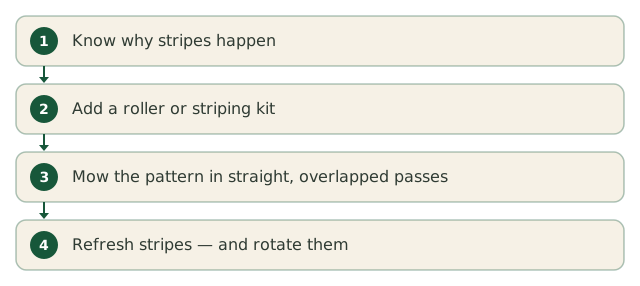
Know why stripes happen
The contrast is the angle of the blades catching the light, not the color of the grass. Grass bent away from your eye looks light; bent toward you it looks dark. Everything else — rollers, patterns, mowing direction — is just controlling which way the blades lay.
- Step 2
Add a roller or striping kit
A weighted roller behind the mower lays the blades flatter for sharper, longer-lasting stripes. Reel mowers with a rear roller stripe by design; on a rotary you can bolt on a striping kit or drag a weighted lawn roller. Cool-season grasses (fescue, bluegrass) have softer blades that bend and hold a stripe easily; stiffer warm-season blades like Bermuda and Zoysia need a lower cut, more roller weight, and a denser stand to show the same contrast.
- Step 3
Mow the pattern in straight, overlapped passes
Pick a straight edge to follow, mow down and back in alternating directions for basic stripes, then mow a second set at 90° for a checkerboard or 45° for diamonds. Overlap each pass slightly and turn outside the stripe zone so you don't scuff the pattern.
- Step 4
Refresh stripes — and rotate them
Re-mowing the same direction deepens stripes for a reveal; rolling them when the grass is slightly damp helps them set. But rotate the pattern over the season — always mowing the same lines compacts those tracks and grooves the lawn.
The system that runs it
How YardLedger handles it
Great lawns are logged. YardLedger is the system behind the result: see how it all fits together.
- Progress photos & gallery
- Lawn stripes are made to be shown. Capture each pattern in the photo gallery — the reveal shots are the most shareable content this hobby produces, and they build the before/after that earns backlinks and neighbor envy.
- Mow log
- Log mow height, direction, and frequency so you can dial in the cut that stripes best for your grass — and remember to rotate the pattern before you groove a track into the lawn.
Start from a schedule built for your yard
An enthusiast lawn program sits on top of the basics done on time. Enter your grass type and ZIP in the free schedule generator for the month-by-month foundation — no signup required.
Open the schedule generatorA reminder when the season’s next job is due
We'll email you about three weeks before this ZIP's normal first freeze — while irrigation contractors still have slots, and before the backflow preventer is the part that freezes.
The blow-out reminder counts back from your metro's NOAA 1991–2020 median first freeze, not this year's forecast — a normal year, give or take a couple of weeks. Add your address and the reminder follows the live forecast for your own yard, with the checklist built around the zones and shut-offs you've mapped.
Questions on the way there
- Do I need a striping kit to stripe my lawn?
- A striping kit isn't required — you can stripe a lawn just by mowing in alternating directions, because the contrast comes from the angle of the blades, not a tool. A weighted roller or striping kit lays the blades over harder for sharper, longer-lasting stripes, which is why most enthusiasts add one.
- Why won't my Bermuda stripe well?
- Warm-season grasses like Bermuda and Zoysia have stiffer blades that don't bend or hold a stripe as easily as cool-season fescue or bluegrass. Mowing lower, adding roller weight, and keeping the lawn dense with a PGR all make warm-season stripes show up better.
- How do I make stripes darker?
- To make lawn stripes darker, mow the dark stripes in the direction facing your main viewing angle, add roller weight to lay the blades flatter, and re-roll when the grass is slightly damp. A denser, healthier lawn always stripes more sharply than a thin one.
Where this guidance comes from
The university extension and public-agency publications listed here back specific statements on this page. Each publication says which statement it backs, so you can check the statement rather than take it on trust. Where a product label or your local extension office disagrees with anything here, follow the label or the extension office.
- Light Reflection and Mowing Patterns
University of Minnesota Turfgrass Science
Stripes are light reflecting off blades bent in different directions — bent away from you looks lighter, bent toward you looks darker.
- Mowing
Cornell University Sports Field Management
A rear roller, standard on reel mowers and now on some rotaries, lays the blades over for the sharpest stripes.
- Mowing (Lawn Problem Solver)
Kansas State University Turfgrass
Mowing the same lines every time leans the grass and wears tracks where the wheels run, which is why this page says to rotate the pattern.
