
Every lawn
Dethatching a Lawn: When It Helps, and When It Does Real Damage
Measure before you dethatch: cut out a wedge of turf and check the thatch layer. Half an inch or less is usually fine. Above that, weigh symptoms, grass type and site; core aeration is the gentler fix and dethatching the faster, harsher one. If you do dethatch, time it so the lawn can recover.
Thatch is the layer of living and dead stems, roots, runners and crowns that builds up between the green grass and the soil. A thin layer, half an inch or less, does no harm; Penn State notes that it buffers swings in soil temperature and moisture. Problems start when the layer thickens and roots grow into it instead of the soil. Thatch holds little water, so a lawn rooted in it dries out, and Missouri Extension warns that such lawns can look healthy in spring and then die in large patches in summer heat. Dethatching rips that layer out with blades, and it takes living turf with it. UMass's advice is to dethatch only when the lawn needs it, not on a routine basis, so start by measuring the layer.
Measure first, then pick the gentlest fix that works
- Step 1
Measure the layer before you do anything
Cut a few wedges of turf 2 to 3 inches deep with a knife or spade, from different parts of the lawn, and look at the profile from the side. Thatch is the brown, spongy band between the green growth and the soil.
As a rough guide, half an inch or less is usually fine. Above that, Minnesota Extension recommends managing it, and Penn State says turf problems are likely beyond about an inch. Thresholds differ by grass: UF/IFAS uses about an inch before removing it from St. Augustine, while Clemson suggests considering it for centipede once thatch passes a quarter-inch. Treat the number as one input. What decides it is the grass, the site and the symptoms: roots growing in the thatch instead of the soil, water that won't soak in, turf that feels spongy or mows unevenly, and patches that die out in summer heat. A sandy root zone or a compacted clay changes how the layer behaves too.
- Step 2
Choose between aeration, removal, or neither
Core aeration pulls plugs through the thatch, opens it to the soil microbes that break it down, and does far less damage to the turf than a dethatcher. It is the gentler option for a layer near half an inch, and a good preventive habit. It is also slow: Purdue notes that annual aeration, with better watering and feeding, may take several years to bring thatch below half an inch. Penn State adds that once thatch reaches an inch or more, preventive practices alone won't control it, which is when mechanical removal earns its damage. And if the layer measures thin, neither job is needed.
- Step 3
Find out what built the layer, or it comes back
Thatch builds when grass produces stems and roots faster than soil life breaks them down. The usual causes are aggressive nitrogen feeding, frequent watering, compacted soil, and acid soil, which Penn State says suppresses the microbes that decompose it. Missouri adds pesticide use that cuts earthworm and microbe numbers. Species matters as well. Kentucky bluegrass, creeping red fescue, hybrid bermudagrass, zoysia and St. Augustine are common thatch builders, while tall fescue and perennial ryegrass rarely develop a thatch problem because they grow in bunches. Remove the layer without changing the cause and it will build again.
- Step 4
Choose timing that allows recovery
Dethatching removes living turf along with the thatch, so do it when the grass can regrow. For cool-season lawns, early fall is generally preferred. Spring works in some regions but invites weeds into the thinned turf and leaves less time before summer stress; coordinate any weed prevention and seeding with the product labels.
For warm-season lawns, Missouri and UF/IFAS wait for active growth: Missouri prefers mid-June for zoysia and bermuda, and UF/IFAS says not to vertical-mow St. Augustine unless it is actively growing. Oklahoma Extension is the exception, with pre-green-up guidance: dethatch bermuda and zoysia before they green up in spring. Use the windows above as planning estimates, then check local guidance and the lawn's condition.
Avoid dethatching under heat or drought stress, on weak turf or on wet soil. One state's pre-green-up timing is not permission for aggressive work on any dormant lawn; confirm the species, method and recovery conditions locally.
- Step 5
Match the tool to the job
Small areas can be done with a thatching rake, a hand rake with sharp, deep blades. For a whole lawn, the machine names overlap (power rake, vertical mower, verticutter, dethatcher), so judge by what it cuts with. Purdue prefers machines that cut with knives or blades and advises against flexible rake-type tines and attachments that fit under a rotary mower blade. Thatch thicker than about an inch is most easily stripped with a sod cutter, which means re-establishing the lawn afterward.
- Step 6
Test the machine setting before treating the lawn
Follow the equipment instructions and local guidance for your grass species when choosing blade depth and spacing. Start on a small test area with a light setting, then inspect the remaining thatch and any turf thinning.
Clemson spaces blades 1 to 2 inches apart for Kentucky bluegrass, red fescue, bermuda and zoysia, and 2 to 3 inches for centipede and St. Augustine; centipede guidance adds about a quarter-inch depth. Go over centipede and St. Augustine in one direction only, because Clemson warns that multiple passes can injure or kill them. A perpendicular second pass can be appropriate on other lawns, but inspect the thatch and turf before repeating. UC IPM sets blades higher and farther apart on bunch grasses. Don't use the pile of debris as a reason to keep going or cut deeper; UMass advises against removing the whole layer in one treatment.
- Step 7
Clean up, water, and seed only where it can establish
Rake up and remove the debris, then water so the exposed roots don't dry out. Thinned areas may need seed, and removing the debris exposes soil for seed contact. Seed only if your grass can be grown from seed and the soil warmth, moisture and remaining growing season support it; keep the seedbed moist, not saturated. Base any feeding on what the grass needs, a soil test and local rules. On zoysia and bermuda, Missouri warns that pre-emergents containing dithiopyr, pendimethalin or prodiamine may slow recovery after severe dethatching, and Colorado State advises against dethatching after a pre-emergent has gone down, because it can disturb the barrier.
Always read and follow the product label — it is the legal authority on rates, timing, and safety. These windows are regional estimates, not a prescription; defer to the label and your local extension office.
The advice worth questioning
- The belief
- “Leaving grass clippings on the lawn builds up thatch, so they should be bagged.”
- What’s actually happening
- Clippings are mostly water and break down quickly, returning some of their nutrients to the soil. Thatch is made of tougher stuff — roots, stems, runners and crowns that decompose slowly and build up between the soil and the green blades. Over-feeding, frequent watering, compacted or acidic soil and vigorously spreading grasses are among its usual causes.
- What it leads to
- Bagging every mowing adds work, sends nutrients to the curb that the lawn then needs back from fertilizer, and leaves the real causes of thatch untouched, so it keeps building while the bags pile up.
- What to understand instead
- Leave clippings where they fall when you mow regularly and they settle into the grass rather than lying in clumps. If thatch is building, look at its causes — how much you feed, compaction, soil pH and your grass type — and measure its depth before deciding to dethatch. Bagging still makes sense for an overgrown cut that would smother the grass, when the lawn is diseased, or when the clippings carry weed seed heads.
If you do dethatch: only while the grass can recover
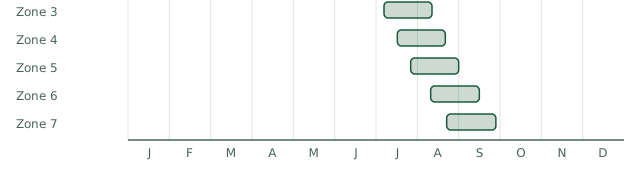
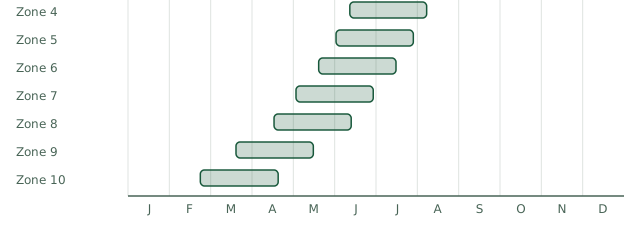
The windows below are timed off frost dates rather than the calendar — the same job happens more than a month apart across the country.
Cool-season lawns — estimated recovery window; confirm locally
Early fall is the usual choice; Penn State allows late summer. Spring removal leaves less recovery time before summer and invites weeds into the thinned turf.
| USDA zone | Window |
|---|---|
| Zone 3 | July 7 – August 11 |
| Zone 4 | July 17 – August 21 |
| Zone 5 | July 27 – August 31 |
| Zone 6 | August 11 – September 15 |
| Zone 7 | August 23 – September 27 |
Warm-season lawns — estimated recovery window; confirm locally
Missouri and UF/IFAS wait for active growth; Missouri prefers mid-June for zoysia and bermuda. Local recommendations vary by species and method.
| USDA zone | Window |
|---|---|
| Zone 4 | June 12 – August 7 |
| Zone 5 | June 2 – July 28 |
| Zone 6 | May 20 – July 15 |
| Zone 7 | May 3 – June 28 |
| Zone 8 | April 17 – June 12 |
| Zone 9 | March 20 – May 15 |
| Zone 10 | February 22 – April 19 |
The windows in each table above are zone-level approximations from long-term freeze normals. A hardiness zone measures winter cold rather than frost dates, so check your own local dates — and where the job is driven by soil temperature, let that have the final say.
Check both freeze dates where you live
The table above is a zone average. Enter your ZIP for the NOAA freeze normals of the station we match to it — first fall freeze and last spring freeze both — free, no signup required.
Free · no signup · NOAA 1991–2020 normals
Rather have the next seasonal job come to you?
We'll email you about three weeks before this ZIP's normal first freeze — while irrigation contractors still have slots, and before the backflow preventer is the part that freezes.
The blow-out reminder counts back from your metro's NOAA 1991–2020 median first freeze, not this year's forecast — a normal year, give or take a couple of weeks. Add your address and the reminder follows the live forecast for your own yard, with the checklist built around the zones and shut-offs you've mapped.
Dethatching and seeding in the same window?
Dethatching can help prepare a seedbed when removal is needed, but seeding also depends on the species, soil condition, moisture and remaining growing season. Many pre-emergents can injure new grass—skip seeded areas unless the exact label permits that use. Enter your ZIP in the free pre-emergent check to see where the crabgrass window falls near you, so the two do not collide — no signup required.
Check my pre-emergent windowClippings, aeration and seeding afterwards
- How do I know if my lawn needs dethatching?
- To check whether a lawn needs dethatching, cut a few wedges of turf with a spade and measure the brown, spongy layer between the green growth and the soil. As a rough guide, half an inch or less is usually fine; above that is a point to consider managing it, and some guidance uses about an inch for removal, such as UF/IFAS for St. Augustine. The number is one input. The grass, the site and symptoms such as roots growing in the thatch, poor water penetration or summer dieback decide it, together with local Extension guidance.
- Is dethatching or aeration better?
- Neither is better across the board. Core aeration is gentler: it opens the thatch to the microbes that decompose it and relieves compaction without tearing out turf, but Purdue notes it can take several years to bring thatch back below half an inch. Dethatching works faster and does more damage, which suits a layer approaching or past an inch; well beyond an inch, Purdue suggests a sod cutter and re-establishing. Measure first; if the layer is thin, you may need neither.
- When should I dethatch my lawn?
- Dethatch when your grass can recover. Early fall is generally preferred for cool-season lawns; spring can work in some regions but invites weeds and leaves less time before summer stress. Warm-season lawns should ordinarily be fully green and actively growing, though Oklahoma Extension advises pre-green-up dethatching for bermuda and zoysia. Follow local guidance for your grass and method, avoid heat or drought stress, and treat the freeze-based zone dates as planning estimates.
- Do grass clippings cause thatch?
- Clippings causing thatch is a widely held belief, but Purdue notes that clippings are mostly water and break down quickly. Thatch is mainly roots, stems, runners and crowns, which are tougher and slow to decompose. Heavy nitrogen, frequent watering, compacted or acid soil and thatch-prone grasses are the usual causes. Ordinary clipping return is not a reason to bag; mow at the right height and frequency.
- Can I dethatch and overseed at the same time?
- Dethatching and overseeding can go together: removing the debris exposes soil for seed contact, but the grass must be one you can seed, and soil warmth, moisture and the remaining season must support establishment. An early dethatching date does not make the lawn ready for seeding or feeding. Keep a new seedbed moist, not saturated, and check any pre-emergent for compatibility with seeding before adding it. Most conventional pre-emergents can injure seedlings or prevent establishment. Before seeding treated ground, follow the exact product's reseeding interval for the rate used; waits are often months, not weeks. Before treating newly seeded grass, follow its separate waiting, mowing and establishment requirements. Use a product at seeding only when its label allows your grass species, seed mixture, rate and timing. For crabgrass prevention while seeding cool-season grass, mesotrione products with new-seeding directions are an option only for the existing turf and seed mixture that product lists. Species and timing differ by product, especially for fine fescue; avoid over-application, particularly with perennial ryegrass.
Where this guidance comes from
The university extension and public-agency publications listed here back specific statements on this page. Each publication says which statement it backs, so you can check the statement rather than take it on trust. Where a product label or your local extension office disagrees with anything here, follow the label or the extension office.
- Managing Thatch in Lawns
Penn State Extension
Half an inch or less of thatch is beneficial and more than an inch likely causes problems; Kentucky bluegrass and creeping red fescue build it; core aeration is preventive but not enough once thatch reaches an inch; and do not dethatch weak or stressed turf.
- What is Thatch?
UMass Amherst Center for Agriculture, Food, and the Environment
Clippings do not by themselves build thatch; dethatch only when needed, never on wet soil, and do not try to remove the whole layer at once.
- Managing Thatch in Home Lawns (G6708)
University of Missouri Extension
Dethatch only when the grass can recover quickly — early fall for cool-season lawns, mid-June for actively growing zoysia and bermuda; measure with several 2–3 inch plugs; thick thatch can cause sudden summer dieback; and some pre-emergents can slow recovery.
- Controlling Thatch in Lawns (HGIC 2360)
Clemson Cooperative Extension
Measure thatch with a wedge of sod; hybrid bermuda and Kentucky bluegrass are heavy builders; small areas can be hand-raked; and blade spacing runs 1–2 inches for most grasses but 2–3 inches, one direction only, for centipede and St. Augustine.
- Mowing, Dethatching, Aerifying and Rolling Turf (AY-8-W)
Purdue Extension
Tall fescue and perennial ryegrass rarely build thatch; thatch holds little water; aeration can take several years to bring thatch below half an inch; bladed dethatchers are preferred; and clippings break down quickly.
- St. Augustinegrass for Florida Lawns (ENH5)
UF/IFAS Extension
For St. Augustine, UF/IFAS removes thatch over about an inch, uses 3-inch blade spacing, and vertical-mows only while the grass is actively growing.
- Turfgrass Management in Oklahoma (L-437)
Oklahoma State University Extension
Oklahoma's guidance is to dethatch bermuda and zoysia before they green up in spring — a regional exception to the active-growth timing most sources give.
- Healthy Lawns — Dethatching: Methods
UC Statewide IPM Program
A thatching rake works on small lawns, and on bunch grasses dethatcher blades are set higher and farther apart.
- Centipedegrass Yearly Maintenance Program (HGIC 1215)
Clemson Cooperative Extension
Centipede is a lower-threshold case: Clemson considers dethatching once thatch passes a quarter-inch, with blades 2–3 inches apart set about a quarter-inch deep.
- How to control thatch in your lawn
University of Minnesota Extension
Thatch of half an inch or less is usually not a problem; above that, it is time to manage it.
- Control of Annual Grassy Weeds in Lawns (3.101)
Colorado State University Extension
Dethatching after a pre-emergent has been applied can disturb the herbicide barrier.
