
The Southern winter overseed
Overseeding a Warm-Season Lawn with Ryegrass for Winter
Southern lawns go straw-brown for the winter. Overseeding with ryegrass buys you a green one instead — sown over the top just as the base lawn goes dormant, mowed through the off-season, and transitioned back out before spring green-up. It is a cosmetic choice with a real cost, so these guides cover the trade honestly: the timing, which ryegrass, the loss of ordinary fall pre-emergent options unless an exact label permits the sequence, and the spring hand-back that decides whether it hurt the lawn.
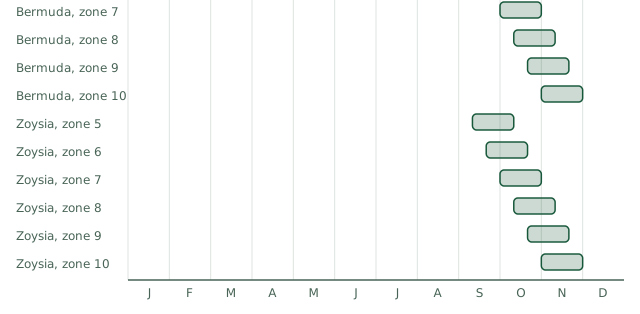
Winter overseeding guides by base lawn
Bermuda
Green through winter instead of Bermuda's straw-brown dormancy — for the cost of off-season mowing.
How to overseed it →Zoysia
Green through winter instead of Zoysia's straw-brown dormancy — for the cost of off-season mowing.
How to overseed it →St. Augustine and centipede are usually left alone. Their canopies are dense enough that ryegrass has to fight the base lawn rather than follow it into dormancy, and the competition coming out of winter tends to leave the lawn thinner than the winter color was worth. If you have one of those, the healthier answer is to let it go dormant.
When does your lawn actually hand over?
The winter-overseeding window is set by soil temperature, not the calendar or your frost date. Enter your ZIP for the live modeled soil temperature where you are, and whether your window is ahead, open, or gone — free, no signup required.
Free · no signup · live modeled soil temperature
Winter overseeding dates by metro and state
The winter-overseeding window moves by about a month between the top of the overseeding band and the bottom — a Dallas lawn is sown while a Phoenix one is still growing. Find your metro or state for the dates, then follow the guide for your base lawn.
- Alabama
- Arizona
- Arkansas
- California
- Florida
- Georgia
- Louisiana
- Mississippi
- Nevada
- North Carolina
- Oklahoma
- South Carolina
- Tennessee
- Texas
- Virginia
The winter-overseeding pages list only the markets where overseeding with ryegrass is genuinely practiced, which is why the list is short and why it is not simply everywhere a warm-season lawn grows. Through the transition zone it stops being a question of hardiness and starts being a question of what your neighbors grow: Oklahoma City and Philadelphia share a hardiness zone and could not be less alike on this. Further north the lawn is usually cool-season anyway — already green all winter, nothing to cover. If your city is not here, letting the lawn go dormant is usually the right answer rather than an oversight — but if the practice is common where you are and we have missed it, that is worth telling us.
Which ryegrass do you seed with?
Perennial Ryegrass
The default for a home lawn you care about the look of.
Perennial ryegrass is finer-bladed, darker, and denser than annual ryegrass, so the winter lawn actually looks like a lawn rather than a cover crop. It costs more per bag and it does not die as obligingly in spring — you have to manage it out — but for a front yard it is worth it.
Perennial Ryegrass care schedule →Annual Ryegrass
The cheap option — and the one that leaves on its own.
Annual ryegrass is coarser, lighter green, and clumpier, but it germinates in days, costs a fraction as much, and reliably dies out in the first real heat, which makes the spring transition mostly automatic. Common on athletic fields, large areas, and anywhere color matters more than texture.
Annual Ryegrass care schedule →Why this is not counted back from your frost date
Most timing advice for overseeding works back from the first fall frost. That rule is sound for a cool-season lawn's autumn renovation, where the seedlings genuinely have to root before the ground goes cold — and it breaks completely here. A winter overseed is not racing a freeze; it is following the base lawn into dormancy, which happens as soil falls through about 70°F. Across the mild-winter markets that actually do this, those two things come months apart: a hard freeze can be a January event in the low desert and on the Gulf Coast, long after the lawn has stopped growing and the seeding window has shut. The dates on this page come from the temperature curve instead, which is the same source the monthly schedule pages use — so the two can never disagree.
This is not the same job as a fall overseed
A cool-season lawn overseeds in early fall with its own species, to be permanently thicker — see how to overseed a cool-season lawn. A warm-season lawn overseeds later, with a different, temporary species, purely for color it then has to get rid of in spring. With either kind of seeding, check the exact pre-emergent label before combining the jobs.
Where this guidance comes from
The university extension and public-agency publications listed here back specific statements on this page. Each publication says which statement it backs, so you can check the statement rather than take it on trust. Where a product label or your local extension office disagrees with anything here, follow the label or the extension office.
- Pros and Cons of Overseeding Warm-Season Lawns (Turf Tips Newsletter, 10-3-11)
Mississippi State University Extension Service
Ryegrass is seeded once soil temperature comes down to around 70°F — the soil-temperature trigger this page's timing is built on.
- Overseeding Winter Grasses into Bermudagrass Turf (AZ1683)
University of Arizona Cooperative Extension
Overseeding too early, while it is still warm, favors the bermudagrass and keeps the winter grass from establishing — why this page waits for the season to cool.
- Your Florida Lawn in Winter
UF/IFAS Gardening Solutions
Ryegrass overseeding is a temporary winter lawn on dormant warm-season grass, sown once the weather cools in fall and fading out as temperatures rise in spring.
