
Every lawn
How to Get Rid of Dandelions — and What They Are Telling You
Treat dandelions in fall while they are still green and growing; Purdue and Iowa State give mid-September to early November in the Midwest. A systemic herbicide labeled for your grass travels down to the taproot with the plant's winter reserves. Digging works only if you remove the root. Then mow at a suitable height and feed the grass.
A dandelion is a perennial with a strong taproot, most commonly in the top 6 to 18 inches of soil according to UC IPM, and most of what goes wrong with dandelion control follows from it. Pulling the top off leaves the root, and UC IPM notes a piece of root as short as an inch can grow a new plant. A spring spray often kills the leaves and not the root: in a Kansas trial SDSU reports, spring treatments that looked like 90% control had fallen below 50% by November. And because the seed blows in from far away, a lawn with many dandelions is usually a lawn with room for them: thin turf, mowing that is too short, or too little nitrogen. You don't have to act at all. Purdue Extension's view is that a few weeds are acceptable, and Iowa State's is to let them be if you enjoy them.
What the dandelions are telling you, then what to do
- Step 1
Read what a heavy population is telling you first
UC IPM notes dandelion seed can blow for miles, so you can't keep it out. What you can change is whether it finds open soil. Dense turf shades the surface and reduces seedling establishment. A heavy population usually points to thin grass, mowing too short, or underfeeding: in a three-year mowing-height and nitrogen trial an NDSU Extension specialist reports, plots mown at 3 and 4 inches had fewer dandelions than plots mown at 2, and more nitrogen meant fewer dandelions, though the top rate was a research-level one, so feed at your grass's recommended rate. Minnesota Extension notes they can also indicate compaction or low calcium, but treat those as things to check, not conclusions: push a screwdriver into moist soil for compaction, and use a soil test rather than adding calcium or potassium on spec. NDSU notes added potassium actually increases dandelions.
- Step 2
If you are digging: get the whole taproot, when soil is damp
Digging works for a few plants and anywhere you'd rather not spray, as long as you get the root. Dig after a soaking rain or watering, use a narrow dandelion fork or weeding knife, and lever the root out rather than pulling the leaves. Dig before the plants set seed. Expect to repeat it: UC IPM calls hand removal usually futile unless it is kept up, because broken roots resprout, so check the spot for a few months. Fill and seed the hole so it doesn't become a seedbed for the next weed.
- Step 3
If you are spraying: fall works best
Purdue Extension explains why fall is the best time: going into winter a perennial stores energy in its roots, and a systemic broadleaf herbicide travels down with those reserves. Purdue and Iowa State put the window at mid-September to early November in the Midwest. The plant has to be growing: SDSU wants daytime highs of 60 to 85°F for several days after the application, with nights above freezing. These products work slowly, so fall-treated plants may not look dead for weeks.
Check the label for your grass species by name. UC IPM warns triclopyr should not be used on bermuda or other warm-season turf. Purdue advises applying between 50 and 85°F and not when soil moisture is low; SDSU notes ester and dicamba products drift more as temperatures rise. A cooler day does not rule out drift or turf injury, and the label governs. Avoid windy days, and never treat where runoff can reach a storm drain or a waterway. Always read and follow the product label — it is the legal authority on rates, timing, and safety. These windows are regional estimates, not a prescription; defer to the label and your local extension office.
- Step 4
In spring, a spray mainly stops seed
Spring treatment can make the lawn look better quickly, but SDSU's summary of the Kansas trial is that it mainly reduces seed production. Treatments before bloom gave good short-term control, while those at peak bloom were inconsistent, and every spring timing had dropped below 50% control by November. Sprays after bloom gave the best short-term control but come after the seed is set, so SDSU treats pre-bloom as the best spring window; Purdue ranks late spring or early summer, after flowering, second to fall. If you spray in spring, plan a fall follow-up for the roots. A spring crabgrass preventer does nothing for dandelions already growing; Purdue notes it will not prevent perennial broadleaf weeds.
- Step 5
Spot-treat rather than blanket-spraying the lawn
Purdue's advice for a lawn with only a few weeds is to spot-treat them rather than the whole lawn. A weed-and-feed also ties the herbicide to a fertilizer date: SDSU notes that nitrogen applied at dandelion pre-bloom may inhibit the lawn's root development compared with feeding a few weeks later. A broadcast product makes more sense only where the dandelions are spread across the lawn.
- Step 6
Mow at a suitable height for your grass, not too short
The rosette lies below the blade, so UC IPM notes mowing has no direct effect on the plants. What mowing changes is the light reaching the soil. Choose a height within your grass's own range, toward the upper part, and avoid scalping: NDSU's trial found fewer dandelions at 3 to 4 inches than at 2.
- Step 7
Feed the grass, and fix compaction only if it is there
Thin, underfed turf leaves room. UMass notes low nitrogen can lead to high dandelion numbers because the grass competes less. Feed according to your grass and a soil test rather than adding lime, calcium or potassium to treat the dandelions themselves. If a screwdriver won't go into moist soil, core aeration can help the grass; it is an option for confirmed compaction, not a dandelion treatment. UC IPM's verdict is that no single control procedure has worked on its own, so combine these.
- Step 8
Seed thin areas before you spray, not after
Every dandelion you remove leaves a space. For cool-season lawns, the useful order is to overseed thin areas in late summer, then spray in fall once the new grass has been mowed at least three times, which is Purdue's guidance for new grass. Spraying first can push seeding past its window, because many broadleaf products require a wait before seeding, and products that also contain a crabgrass preventer can stop grass seed from germinating. Read the active ingredients and the label's seeding interval.
Dandelions: fall first, spring second
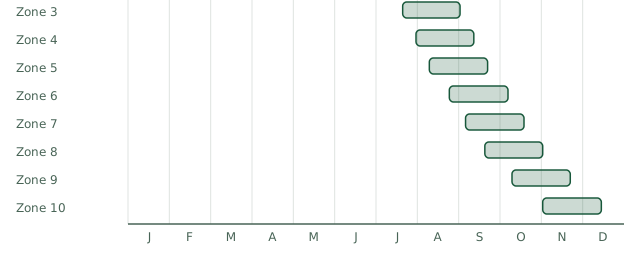
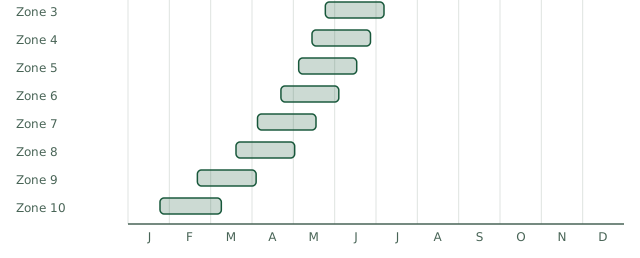
The windows below are timed off frost dates rather than the calendar — the same job happens more than a month apart across the country.
Both lawn types — fall is the most effective spray window
Going into winter the plant stores reserves in its root, and a systemic herbicide travels with them (Purdue). Purdue and Iowa State run this window into early November in the Midwest, while leaves are still green; these dates are a freeze-based estimate.
| USDA zone | Window |
|---|---|
| Zone 3 | July 21 – September 1 |
| Zone 4 | July 31 – September 11 |
| Zone 5 | August 10 – September 21 |
| Zone 6 | August 25 – October 6 |
| Zone 7 | September 6 – October 18 |
| Zone 8 | September 20 – November 1 |
| Zone 9 | October 10 – November 21 |
| Zone 10 | November 2 – December 14 |
Spring, before it flowers — mainly to stop seed
In a Kansas trial SDSU reports, pre-bloom sprays gave good short-term control and peak-bloom sprays were inconsistent, but every spring timing had fallen below 50% control by November. Plan a fall follow-up.
| USDA zone | Window |
|---|---|
| Zone 3 | May 25 – July 6 |
| Zone 4 | May 15 – June 26 |
| Zone 5 | May 5 – June 16 |
| Zone 6 | April 22 – June 3 |
| Zone 7 | April 5 – May 17 |
| Zone 8 | March 20 – May 1 |
| Zone 9 | February 20 – April 3 |
| Zone 10 | January 25 – March 8 |
The windows in each table above are zone-level approximations from long-term freeze normals. A hardiness zone measures winter cold rather than frost dates, so check your own local dates — and where the job is driven by soil temperature, let that have the final say.
Set the fall window against your own first freeze
The table above is a zone average. Enter your ZIP for the NOAA freeze normals of the station we match to it — first fall freeze and last spring freeze both — free, no signup required.
Free · no signup · NOAA 1991–2020 normals
A heads-up for the next seasonal job in your area
We'll email you about three weeks before this ZIP's normal first freeze — while irrigation contractors still have slots, and before the backflow preventer is the part that freezes.
The blow-out reminder counts back from your metro's NOAA 1991–2020 median first freeze, not this year's forecast — a normal year, give or take a couple of weeks. Add your address and the reminder follows the live forecast for your own yard, with the checklist built around the zones and shut-offs you've mapped.
Pulling, mowing, and whether they harm the lawn
- What is the best time to kill dandelions?
- The best time to kill dandelions is fall, while the plants are still green and growing: Purdue and Iowa State give mid-September to early November in the Midwest. Dandelions are storing energy in the root for winter, and a systemic herbicide travels down with it. Spring treatment mainly stops seeding; in a Kansas trial, spring control had fallen below 50% by November.
- Does pulling dandelions work?
- Pulling dandelions works only if you remove as much of the taproot as you can, which UC IPM places mostly in the top 6 to 18 inches of soil, because a root piece as short as an inch can regrow. Dig when the soil is damp, use a narrow fork and lever rather than pull, and fill and seed the hole. For a few plants it is a good method, but expect to re-dig resprouts and recheck the spot for a few months.
- Why does my lawn have so many dandelions?
- A lawn gets many dandelions because there is room for the seed, which blows in from far away. The usual reasons are thin turf, mowing too short and too little nitrogen: an NDSU Extension specialist's trial found fewer dandelions at 3 to 4 inches than at 2, and with more nitrogen. Compacted soil can thin the grass too, but check before you treat it.
- Are dandelions bad for my lawn?
- Dandelions compete with grass, and UC IPM notes a dense mat of leaves can crowd it out. They are also as much a symptom as a cause, filling ground the grass has already lost. Their early flowers feed bees and other pollinators, according to Iowa State, though Minnesota Extension notes their value to pollinators is debated. A light population is cosmetic; leaving it, digging it or spot-treating in fall are all reasonable.
- Will mowing get rid of dandelions?
- Mowing does not get rid of dandelions directly: the rosette sits below the blade, and mowing off the flowers only delays seeding. Mowing height matters indirectly, because turf cut at a suitable height for its species shades the soil and reduces new seedlings. Mowing is prevention here, not removal.
Where this guidance comes from
The university extension and public-agency publications listed here back specific statements on this page. Each publication says which statement it backs, so you can check the statement rather than take it on trust. Where a product label or your local extension office disagrees with anything here, follow the label or the extension office.
- Dandelions
University of Minnesota Extension
Fall is the most effective time to spray dandelions; Minnesota notes they can indicate compaction or low calcium, and that their value to pollinators is debated.
- Pest Notes: Dandelion (UC ANR Publication 7469)
UC Statewide IPM Program (UC IPM)
The taproot sits mostly in the top 6–18 inches of soil and regrows from an inch of root, so digging must be thorough and repeated; seed blows in from miles away; dense turf reduces seedlings; mowing does not reach the rosette; and triclopyr is not for warm-season turf.
- Dandelions in Lawns
UMass Amherst Center for Agriculture, Food, and the Environment
A dense, well-fed lawn is the lasting control, and low nitrogen fertility is one of the conditions that lets dandelions take over.
- Control of Broadleaf Weeds in Home Lawns (AY-9)
Purdue Extension
Fall (mid-September to early November in the Midwest) is the best time for perennial broadleaves, applied between 50 and 85°F and not on dry soil; spot-treat a few weeds; crabgrass preventers don't stop dandelions; wait for new grass to be mowed three times; and a few weeds are acceptable.
- Spring Dandelion Control
South Dakota State University Extension
Spring sprays mainly stop seeding: in a Kansas trial every spring timing fell below 50% control by November, so a fall follow-up is needed; herbicides want highs of 60–85°F, drift rises with heat, and nitrogen at pre-bloom may slow lawn rooting.
- Spring is Here, as are some Yellow Flowers
North Dakota State University Extension
In an Extension specialist's three-year mowing-height and nitrogen trial without herbicide, plots mown at 3–4 inches and fed more nitrogen (up to a research-level rate) had fewer dandelions, while potassium increased them.
- Control of Dandelions
Iowa State University Extension and Outreach
Pull the whole taproot, treat in fall (mid-September to early November in Iowa), and know that tolerating dandelions is a reasonable choice since the flowers feed pollinators.
