
Every lawn
Lawn Aeration: Whether You Need It, and When to Do It
Check for compaction first: if a screwdriver slides easily into moist soil, you probably don't need to aerate. If the soil is compacted, aerate cool-season lawns in early fall and warm-season lawns from full green-up into summer, while the grass is growing. Use a core aerator that pulls plugs, and leave them to break down.
Core aeration pulls plugs of soil, about half an inch across and a few inches deep, out of the lawn. The holes let water, air and fertilizer into ground that traffic or construction has packed tight. Lawns that benefit most usually have a cause you can name: clay soil, paths worn by kids or dogs, a yard graded with heavy equipment, or water that puddles and runs off instead of soaking in. How often to do it is where sources differ. K-State, Iowa State and Maryland Extension suggest about once a year even on lightly used lawns, and twice on heavily used clay. Clemson says there is no set number, and that sites where compaction is not a big problem may get by every two to three years; its quick check is a screwdriver that slides into moist soil with little resistance. Timing follows the grass: early fall for cool-season lawns, and full green-up into summer for warm-season lawns, while each is growing fast enough to fill the holes.
Spring or fall? It depends on the grass
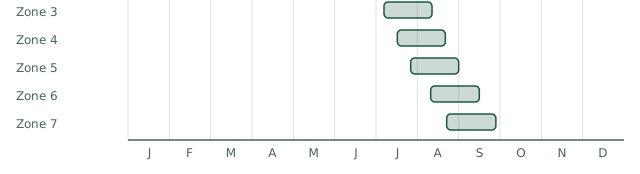
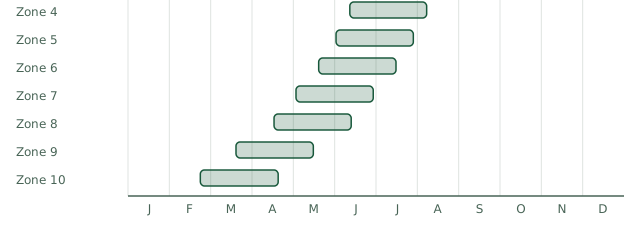
The windows below are timed off frost dates rather than the calendar — the same job happens more than a month apart across the country.
Cool-season lawns — aerate in early fall
Clemson advises leaving at least four weeks of good growing weather after aerating. If the lawn also needs overseeding, the two jobs can be combined here: aerate first, then seed.
| USDA zone | Window |
|---|---|
| Zone 3 | July 7 – August 11 |
| Zone 4 | July 17 – August 21 |
| Zone 5 | July 27 – August 31 |
| Zone 6 | August 11 – September 15 |
| Zone 7 | August 23 – September 27 |
Warm-season lawns — aerate from full green-up into summer
These dates mark the first weeks of active growth. Clemson and K-State extend the season into summer while the grass is growing; skip turf that is dormant or drought-stressed.
| USDA zone | Window |
|---|---|
| Zone 4 | June 12 – August 7 |
| Zone 5 | June 2 – July 28 |
| Zone 6 | May 20 – July 15 |
| Zone 7 | May 3 – June 28 |
| Zone 8 | April 17 – June 12 |
| Zone 9 | March 20 – May 15 |
| Zone 10 | February 22 – April 19 |
The windows in each table above are zone-level approximations from long-term freeze normals. A hardiness zone measures winter cold rather than frost dates, so check your own local dates — and where the job is driven by soil temperature, let that have the final say.
Pin the window to your own frost dates
The table above is a zone average. Enter your ZIP for the NOAA freeze normals of the station we match to it — first fall freeze and last spring freeze both — free, no signup required.
Free · no signup · NOAA 1991–2020 normals
Rather be told when the season turns?
We'll email you about three weeks before this ZIP's normal first freeze — while irrigation contractors still have slots, and before the backflow preventer is the part that freezes.
The blow-out reminder counts back from your metro's NOAA 1991–2020 median first freeze, not this year's forecast — a normal year, give or take a couple of weeks. Add your address and the reminder follows the live forecast for your own yard, with the checklist built around the zones and shut-offs you've mapped.
Getting a core aeration right
- Step 1
Check whether the soil is actually compacted
Push a screwdriver into the lawn a day after rain or watering. If it goes in easily, Clemson Extension says you probably don't need to aerate; if it is hard to push in, you may. Other signs point the same way: water that puddles or runs off, soil that is slow to wet and hard to re-wet once dry, and thin grass along the routes people and dogs take. While you are down there, cut out a small wedge of turf and look at the brown, spongy thatch between the grass and the soil: half an inch or less is usually not a problem. K-State takes a different view: it treats aeration as routine maintenance because no physical sign proves a lawn needs it. So treat these clues as a guide to how much and how often, not as a pass-or-fail test.
- Step 2
Use a core aerator, not a spike aerator
Core aeration removes plugs of soil to help relieve compaction. Ordinary spike aerators, strap-on shoes included, push soil aside without removing it and can contribute to compaction. Rent or hire a machine with hollow tines that pull plugs out and drop them on the lawn.
- Step 3
Aerate moist soil, not dry or soaked
In dry soil the tines can't reach full depth. In wet soil they clog and leave no clean plugs, and Clemson warns that working wet ground adds compaction. If the weather has been dry, water the lawn a day or two ahead so the tines cut in more easily.
- Step 4
Check hole depth and spacing after the first pass
K-State's target is holes about 3 inches deep and no more than 3 inches apart; Iowa State puts it at 20 to 40 holes per square foot. Many machines don't reach that in one pass, so count the holes in a square foot after the first pass and go over the lawn again if they're sparse. Mark sprinkler heads, shallow irrigation lines and any invisible-fence wire before you start, because the tines will hit them.
Locate irrigation heads, buried lines, and utility markings before you start; call your local utility locate service if you are unsure what is under the lawn.
- Step 5
Leave the plugs to break down
The plugs look untidy, but they break down within a couple of weeks and return soil and microbes to the surface, where they help decompose thatch. There is no need to rake them up. To speed things along, break them up by mowing over them once they are dry, or by dragging a mat across the lawn.
- Step 6
Combine it with seeding or feeding if the lawn needs those too
If a thin cool-season lawn needs overseeding and you are inside its seeding window, you can seed right after aerating. Clemson's turfgrass cultivation sheet notes that aeration can coincide with a seeding project, and Penn State describes overseeding after several passes with a core aerator. Spread the seed evenly across the whole area and make sure it reaches soil, not just the holes. Clemson warns that seed landing in the holes can grow much better than seed between them, which leaves a speckled stand. Fertilizer and lime can follow aeration as well.
Plan about 1 lb of nitrogen per 1,000 sq ft per feeding or less — a conservative default, not a universal limit. Local fertilizer rules can be stricter than this and can override it: several states and counties set a lower per-application limit, cap the soluble (quick-release) fraction separately, require a share of slow-release nitrogen, or ban applications outright during a seasonal blackout. Check your state or county rules before you spread. Always read and follow the product label — it is the legal authority on rates, timing, and safety. These windows are regional estimates, not a prescription; defer to the label and your local extension office.
- Step 7
Coordinate aeration and weed prevention
If both jobs are needed, core-aerate before applying pre-emergent where practical. Colorado State Extension reports that core aeration does not reduce the effectiveness of a pre-emergent already applied, so aerating afterward does not automatically waste the application. Check the exact product label and local guidance, especially if seeding: many products inhibit grass establishment.
Always read and follow the product label — it is the legal authority on rates, timing, and safety. These windows are regional estimates, not a prescription; defer to the label and your local extension office.
- Step 8
Know what aeration won't fix
Cores pull out very little thatch. Maryland Extension says a core aerator can punch through thatch but will not remove enough of it. A thick layer is better handled as a dethatching question. Deep compaction is another limit. K-State's figures show heavy construction equipment compacting the top 6 inches of soil, which is deeper than the cores reach. For severe cases K-State suggests modifying the soil and replanting rather than relying on aeration.
Aerating around a pre-emergent?
If both jobs are needed, core-aerate before applying pre-emergent where practical. Colorado State Extension reports that core aeration does not reduce the effectiveness of a pre-emergent already applied, so aerating afterward does not automatically waste the application. Check the exact product label and local guidance, especially if seeding: many products inhibit grass establishment. Enter your ZIP in the free pre-emergent check to see where the crabgrass window falls near you — no signup required.
Check my pre-emergent windowPlugs, frequency and timing: what people ask
- When should I aerate my lawn?
- Aerate when your grass is growing fast enough to recover. For cool-season lawns that is early fall; our frost-based estimate puts it roughly five to ten weeks before the first frost, which leaves Clemson's recommended four weeks of good growing weather afterward. Spring is a second choice. Warm-season lawns aerate once they are fully green and actively growing, from late spring into summer. Avoid dormant or drought-stressed turf whichever grass you have.
- Should I aerate before or after overseeding?
- If you are doing both, aerate first and then seed. Combining the two is an option, not a requirement: Clemson notes aeration can coincide with a seeding project. Spread the seed evenly across the whole area so it contacts soil everywhere, because seed concentrated in the holes can come up in a speckled pattern.
- How often should a lawn be aerated?
- Sources differ on how often to aerate a lawn. K-State, Iowa State and Maryland Extension suggest about once a year even for lightly used lawns, and twice a year for clay soils with heavy foot or pet traffic. Clemson says there is no set number, and that sites where compaction is not a big problem may get by every two to three years. K-State adds that bermuda, buffalograss and zoysia need more aeration than bluegrass or fescue to keep thatch in check. The screwdriver check helps you decide where your lawn falls.
- Is spring or fall better for aeration?
- For cool-season grass, fall is usually the better time to aerate. It lines up with strong growth, less heat stress and the overseeding window. Spring aeration works, but Penn State notes it can bring weed seeds to the surface and open gaps for weeds to germinate. If you also need weed prevention, aerate first where practical and follow the product label, especially if you are overseeding. For warm-season grass, aerate from late spring into summer.
- Do I need to remove the soil plugs?
- No. Leave aeration plugs on the lawn: they break down within a couple of weeks and return soil and microbes to the thatch layer. Mowing over them once they are dry speeds that up.
- Is aeration the same as dethatching?
- No. Aeration pulls plugs of soil to relieve compaction and removes very little thatch. Dethatching cuts or rakes out the spongy layer itself. Thatch under about half an inch is usually not a problem, and aeration helps keep it in check over time. A thicker layer is a separate decision; the dethatching guide covers how to measure it first.
Where this guidance comes from
The university extension and public-agency publications listed here back specific statements on this page. Each publication says which statement it backs, so you can check the statement rather than take it on trust. Where a product label or your local extension office disagrees with anything here, follow the label or the extension office.
- Aerating Lawns (HGIC 1200)
Clemson Cooperative Extension
Cool-season lawns are aerated in fall and warm-season lawns in late spring into summer, each while actively growing and with four weeks to recover; a screwdriver probe is the quick compaction check; wet soil should not be aerated; and seed sown straight into fresh holes can come up speckled.
- Turfgrass Cultivation (HGIC 1226)
Clemson Cooperative Extension
Aeration can be combined with a seeding project, and there is no set schedule: lightly compacted sites may need it only every two to three years.
- Maintaining an Established Lawn
University of Maryland Extension
Use a core aerator rather than a solid-spike tool; compacted soil drains slowly and is hard to re-wet; water first if it has been dry; plugs break down within a couple of weeks; cores remove too little thatch to fix a thick layer; and aerate ideally once a year, otherwise every two to three years.
- Aerating Your Lawn (MF2130)
Kansas State Research and Extension
Holes about 3 inches deep and no more than 3 inches apart, often needing several passes; warm-season lawns aerated late May through July; once a year for less-used soils, twice for heavily used clay, and more often for thatch-prone warm-season grasses; construction compaction reaches about 6 inches and severe cases may need soil modification and replanting.
- Core Aeration of Lawns
Iowa State University Extension and Outreach
Aim for 20 to 40 holes per square foot, which often takes several passes; once a year suits lightly used, well-drained lawns, and clay soils with heavy foot or pet traffic call for twice a year.
- Lawn Management through the Seasons
Penn State Extension
Spring aeration on a cool-season lawn can open the surface just as weeds such as crabgrass are germinating, which is one reason this page favors fall; overseeding can follow aeration.
- Control of Annual Grassy Weeds in Lawns (3.101)
Colorado State University Extension
Core aeration does not reduce the effectiveness of a pre-emergent that has already been applied.
