
Year-round
Best Lawn on the Block: The System Behind Great Curb Appeal
The best lawn on the block comes from a handful of habits done consistently and on time, and a well-kept lawn can add to a home's curb appeal. Here's the system, and how to run it without it running you.
The system, step by step
- Step 1
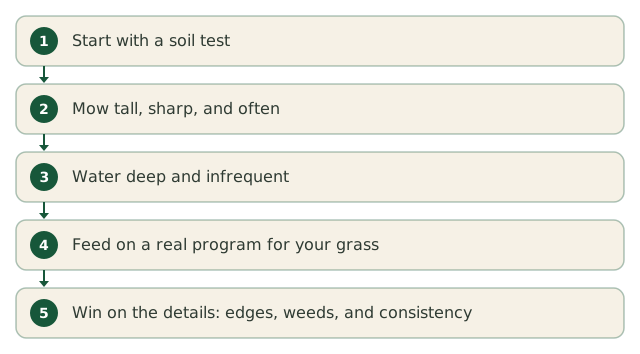
Start with a soil test
The best lawns are built on soil chemistry, not guesswork. A cheap soil test reports your pH and the nutrient levels your lab measures, so your feeding and any lime or sulfur follows its recommendation — not a shot in the dark that wastes money and can hurt the lawn.
- Step 2
Mow tall, sharp, and often
More lawns are made or broken at the mower than anywhere else. Keep the blade sharp, mow often enough to remove no more than a third of the height at a time, and mow in the upper part of your grass's range — within it, taller turf shades out weeds, roots deeper, and stays greener.
Never remove more than a third of the blade in one mow.
- Step 3
Water deep and infrequent
Deep, infrequent morning watering builds the deep roots that carry a lawn through heat; daily sprinkles build shallow roots and invite disease. Water early so the canopy dries, and only when the lawn actually needs it.
- Step 4
Feed on a real program for your grass
Feed your grass type on schedule with the right amount at the right time — moderate, regular doses beat occasional dumps. Use iron when you want color without growth, and time everything to your season, not a generic national chart.
Plan about 1 lb of nitrogen per 1,000 sq ft per feeding or less — a conservative default, not a universal limit. Don't feed dormant or heat-stressed turf. Local fertilizer rules can be stricter than this and can override it: several states and counties set a lower per-application limit, cap the soluble (quick-release) fraction separately, require a share of slow-release nitrogen, or ban applications outright during a seasonal blackout. Check your state or county rules before you spread. Always read and follow the product label — it is the legal authority on rates, timing, and safety. These windows are regional estimates, not a prescription; defer to the label and your local extension office.
- Step 5
Win on the details: edges, weeds, and consistency
Crisp edges along the drive and beds make an average lawn look maintained, and staying ahead of weeds keeps the stand dense. The neighbor-envy lawn is rarely the one with the most product down — it's the one kept consistent week after week.
The system that runs it
How YardLedger handles it
Great lawns are logged. YardLedger is the system behind the result: see how it all fits together.
- Weather-aware schedule & reminders
- The best-lawn-on-the-block system comes down to doing the right thing on time. YardLedger builds the schedule for your grass and zone and reminds you what's next — so the best lawn on the block fits around the rest of your week.
- Progress photos
- Track the lawn improving over the season and keep the before/after proof — the curb-appeal payoff you can actually see, and show.
Start from a schedule built for your yard
An enthusiast lawn program sits on top of the basics done on time. Enter your grass type and ZIP in the free schedule generator for the month-by-month foundation — no signup required.
Open the schedule generatorA reminder when the season’s next job is due
We'll email you about three weeks before this ZIP's normal first freeze — while irrigation contractors still have slots, and before the backflow preventer is the part that freezes.
The blow-out reminder counts back from your metro's NOAA 1991–2020 median first freeze, not this year's forecast — a normal year, give or take a couple of weeks. Add your address and the reminder follows the live forecast for your own yard, with the checklist built around the zones and shut-offs you've mapped.
Questions on the way there
- What's the secret to the best lawn on the block?
- The secret to the best lawn on the block is consistency on the fundamentals: a soil test to aim the program, mowing tall and often with a sharp blade, deep and infrequent watering, a real feeding schedule for your grass type, and staying ahead of weeds and edges. The standout lawn is usually the best-maintained one, not the one with the most product down.
- Does a nice lawn actually add home value?
- A well-kept lawn can contribute to a home's curb appeal — how the property looks from the street. What it adds to any particular sale price is not something a general figure can tell you: that depends on the home, the local market and everything else about the property. Treat lawn care as an investment in how the place looks and how you use it, not as a predictable financial return.
- Do I need to spend a lot to have a great lawn?
- A great lawn doesn't take big spending. The biggest gains come from free or cheap habits — proper mowing, smart watering, and right-timed feeding aimed by a $15 soil test. Premium gear like a reel mower and a PGR program take it to the next level, but the fundamentals do most of the work.
Where this guidance comes from
The university extension and public-agency publications listed here back specific statements on this page. Each publication says which statement it backs, so you can check the statement rather than take it on trust. Where a product label or your local extension office disagrees with anything here, follow the label or the extension office.
- Carolina Lawns: A Guide to Maintaining Quality Turf in the Landscape (AG-69)
NC State Extension
Mow often enough to take off less than a third of the leaf each time, and keep the blade sharp.
- Watering Lawns (HGIC 1207)
Clemson Cooperative Extension
Water deeply and infrequently to build deep roots, and water early in the morning to limit disease.
- Soil Testing (HGIC 1652)
Clemson Cooperative Extension
A soil test reports your pH and nutrient levels and recommends the fertilizer and lime to add, so feeding is aimed rather than guessed.
