
Winter overseeding dates
When to Winter Overseed in San Antonio, TX
In San Antonio, TX, overseed bermuda grass with ryegrass around late October to mid-November. The window is set by temperature — soil falling through about 70°F and nights settling into the 50s°F — and the hand-back begins around early February, when Bermuda starts waking up.
Winter overseeding is a regional habit rather than a national one, and San Antonio, TX is inside the band that does it: Bermuda goes dormant and straw-brown here for months, and ryegrass sown over the top covers it until spring. The winter is mild enough that the ryegrass holds its color the whole way through. The window is set by temperature — soil falling through about 70°F and nights settling into the 50s°F, which is Bermuda handing the lawn over.
In San Antonio, TX the window normally lands in late October to mid-November. Do not work it back from your first frost date: this is exactly the part of the country where a hard freeze can arrive in January, months after the seeding window has closed. And price in the other end before you start — the hand-back begins around early February, when Bermuda starts waking up and the ryegrass has to start coming out.
- Sow the ryegrass
- late October to mid-November
- Start the hand-back
- early February
- The ryegrass hand-back begins when the base lawn breaks dormancy — not when it has finished.
- USDA zone
- 9
- Sow ryegrass once soil at a few inches falls through 70°F and nights settle into the 50s°F.
The winter overseeding weeks shown are when the ryegrass sowing conditions normally arrive, not a date to diarise. A warm autumn pushes them later and a cool one pulls them earlier, and a shaded or low-lying yard turns over before an open, built-up one. Treat this as the fortnight to start watching the lawn, and let the lawn call it.
What the soil actually does in San Antonio, TX
Across 10 years of historical soil-temperature estimates from ERA5 reanalysis, San Antonio, TX's shallow soil normally falls through 70°F around October 31 — but the sampled years ran from October 17 to November 20, a 34-day spread. That spread is the reason this page gives you a signal to watch for and not a date to diarise: it is wider than the late October to mid-November window itself. It falls on through 65°F around November 22, which leaves about 22 days between the lawn handing over and a seedling establishing into real cold.
Of the 27 markets we publish a soil normal for, San Antonio is the 19th to hand over — 18 turn earlier and 8 hold on longer. The nearest published crossings on either side belong to Baton Rouge, LA (October 30) and Austin, TX (November 1). Sowing advice written for either of those transfers here far better than a national "overseed in October" does.
San Antonio's winter-overseeding window is a zone window — every zone 9 metro in the country is handed the same late October to mid-November, which is the resolution the schedule table works at. The soil says something finer. Against the other Texas markets we publish: Austin's soil turns 1 day later (November 1); Dallas's soil turns 3 days earlier (October 28); El Paso's soil turns 5 days earlier (October 26); Houston's soil turns 1 day later (November 1). Where your own address sits between them, take the nearer one and let the lawn adjudicate.
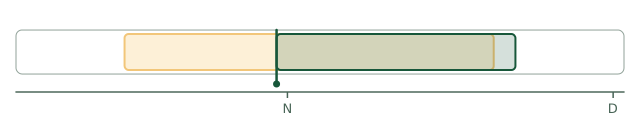
- Sow here — October 31 to November 22
- Range across the sampled years — October 17 – November 20
- Median handover — October 31
By base lawn in San Antonio, TX
| Base lawn | Sow | Start the hand-back |
|---|---|---|
| Bermuda | late October to mid-November | early February |
| Zoysia | late October to mid-November | early February |
The full method — scalping, seeding rate, winter mowing and feeding, and the spring transition — is on each base lawn's guide. For the rest of the year, see the month-by-month Bermuda care schedule for zone 9.
Is it time in San Antonio, TX this year?
The late October to mid-November window above is derived from zone 9 phenology — an average across the whole San Antonio, TX area and every year in it. Enter your ZIP for the live modeled soil temperature at your address and this year's date instead of a typical one — free, no signup required.
Free · no signup · live modeled soil temperature
The signal, not the date
For a winter ryegrass overseed, watch the lawn, not the calendar. Sow once nighttime lows are settling into the 50s°F, soil at a few inches has fallen through about 70°F, and the base lawn has visibly slowed — growth easing off, color going flat. That is the base lawn handing over. Seed before it and you are sowing into a lawn that is still growing and will out-compete the seedlings; seed well after it and the ryegrass is not established when real cold arrives.
Choosing the seed, and why the date is not a frost date
- Perennial Ryegrass: The default for a home lawn you care about the look of.
- Annual Ryegrass: The cheap option — and the one that leaves on its own.
The full comparison — how each behaves through winter and what each costs you at hand-back — is on the Bermuda guide. Why these dates come from soil temperature rather than your first frost — which in San Antonio, TX would be wrong by weeks — is set out on the winter overseeding hub. Whichever seed you sow, combine it with a fall pre-emergent only when the product label permits your existing turf, seed mixture, rate and stage. See fall pre-emergent timing for the timing and label checks.
Winter ryegrass in San Antonio, TX, question by question
- When should I overseed bermuda grass in San Antonio, TX?
- Overseed bermuda grass in San Antonio, TX with ryegrass around late October to mid-November. The trigger is nights settling into the 50s°F with soil a few inches down falling through about 70°F, and the base lawn visibly slowing — those dates are when that normally happens here. In San Antonio's historical soil-temperature estimates from ERA5 reanalysis, that crossing has landed around October 31 across 10 years. The winter overseeding weeks shown are when the ryegrass sowing conditions normally arrive, not a date to diarise. A warm autumn pushes them later and a cool one pulls them earlier, and a shaded or low-lying yard turns over before an open, built-up one. Treat this as the fortnight to start watching the lawn, and let the lawn call it.
- Is it too late to overseed in San Antonio, TX?
- Sowing ryegrass later than late October to mid-November is the survivable mistake, not the fatal one: you get a thinner stand that takes longer to look like anything, but ryegrass germinates in days and will still come up. Going *early* is the real error — sown into a lawn that is still growing, the ryegrass is competing with bermuda grass instead of following it into dormancy. For scale, San Antonio's own crossing has run as early as October 17 and as late as November 20 across the sampled years, so "early" and "late" here are 34 days apart — which is why the lawn, not the date, is the thing to watch.
- When do I take the ryegrass back out in San Antonio, TX?
- In San Antonio, TX, start taking the ryegrass back out around early February, when bermuda grass typically begins breaking dormancy — not once it has finished. Stop feeding and watering the ryegrass, drop the mowing height, and let the heat finish it. Annual ryegrass largely leaves on its own; perennial usually needs a transition herbicide labeled for bermuda grass. Leaving it standing over a lawn that is trying to wake up is what produces a thin, late green-up. Always read and follow the product label — it is the legal authority on rates, timing, and safety. These windows are regional estimates, not a prescription; defer to the label and your local extension office.
- Can I put down a fall pre-emergent in San Antonio, TX if I overseed?
- Where you sow ryegrass in San Antonio, TX, you usually must skip or tightly limit fall prevention. Any permitted sequence must match the exact label's existing bermuda grass, new ryegrass, seed mixture, rate and stage. Before seeding treated ground, follow its rate-specific reseeding interval, often months. Before treating newly seeded grass, follow its separate waiting, mowing and establishment requirements. Always read and follow the product label — it is the legal authority on rates, timing, and safety. These windows are regional estimates, not a prescription; defer to the label and your local extension office.
- Is winter overseeding worth it in San Antonio, TX?
- Winter overseeding in San Antonio, TX is a cosmetic choice with a real price, and plenty of lawns here correctly skip it. You are buying a green winter with off-season mowing, restrained feeding, fewer fall weed-control options (few products are labeled on overseeded bermuda), and a hand-back from early February that has to be done on time or it costs bermuda grass its spring vigor. Front lawns on show are usually where it pays.
