
Before the first hard freeze
How to Winterize Sprinklers Without an Air Compressor
Without a compressor, drain the system by gravity — but only if it was installed to drain that way, so confirm the drain layout and follow the installation's own procedure. A small pancake compressor usually cannot sustain the air volume a blow-out needs, and more pressure is no substitute. If the method or equipment is uncertain, hire qualified irrigation service.
No single compressor size or no-compressor method suits every irrigation system. Confirm the installation and component instructions before choosing gravity drainage or air. Pipe length, zone flow and permitted pressure affect the airflow needed; more pressure is not a substitute. If the method or equipment is uncertain, arrange a qualified irrigation service.
Working through it
- Step 1
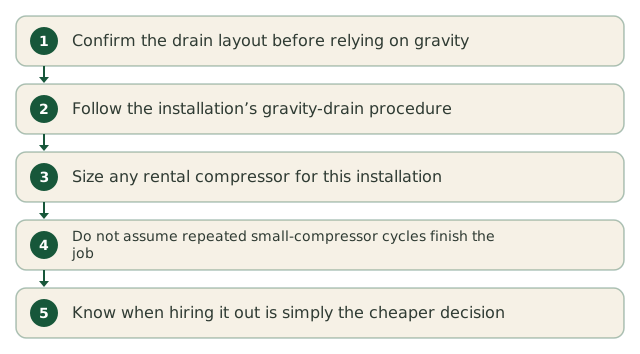
Confirm the drain layout before relying on gravity
Identify the installed drains, low points, slopes and component models with the installer’s records or qualified help. Finding a valve in a box does not establish that all piping slopes toward it. Automatic drains may serve laterals while the mainline, risers and components need separate treatment.
- Step 2
Follow the installation’s gravity-drain procedure
Where gravity drainage is confirmed suitable, follow the installation’s sequence for supply shutoff, pressure relief and opening the specified drains. Operating a zone briefly does not prove a diaphragm-valve chamber empties. Follow each valve, sprinkler and backflow model’s retained-water instructions; service or disassembly is model-specific. Leave the drains open only if the installation’s instructions require that storage position.
If a component or drain path is unknown, stop and use qualified help. Adjacent pipe draining is not evidence that every valve chamber or riser is empty.
- Step 3
Size any rental compressor for this installation
Have the installer, equipment manufacturer or qualified irrigation professional establish the required delivered airflow at the permitted pressure. A tank size, horsepower or generic CFM range does not establish suitability. Confirm connection, regulation and air-phase isolation before renting or connecting equipment.
Use air only where the equipment instructions permit it. Keep a zone open from before air starts until the compressor is off; never pressurize closed piping. Stay at or below 50 PSI and any lower component limit. Wear eye protection, keep people away from heads and fittings, and do not continue blowing a dry zone. Stop the compressor and relieve pressure before disconnecting or changing the setup.
- Step 4
Do not assume repeated small-compressor cycles finish the job
Small shop compressors often cannot sustain the airflow a whole system needs. On suitable pop-up sprinkler circuits, heads that fall once the tank empties are a warning that delivered airflow is inadequate; stop and arrange correctly sized equipment or qualified service. Heads staying up is only an airflow check, not proof every component has drained. Short passes limit heating; follow the equipment’s cycle and endpoint instructions. Never compensate with higher pressure or a charged-tank burst.
Use air only where the equipment instructions permit it. Keep a zone open from before air starts until the compressor is off; never pressurize closed piping. Stay at or below 50 PSI and any lower component limit. Wear eye protection, keep people away from heads and fittings, and do not continue blowing a dry zone. Stop the compressor and relieve pressure before disconnecting or changing the setup.
- Step 5
Know when hiring it out is simply the cheaper decision
A professional blow-out typically runs $50–250. Freeze repairs typically run $170–$2,500+. If your system has no drain valves, you have no suitable compressor, and you live somewhere with real hard freezes, the arithmetic is not close — and a contractor who breaks something is the one who fixes it.
When does your first freeze usually arrive?
The right sprinkler winterization method depends on your equipment, and the planning window depends on your location. Enter your ZIP for the NOAA freeze normals of the station we match to it — free, no signup required.
Free · no signup · NOAA 1991–2020 normals
Where this job usually trips people up
- Can I blow out sprinklers with a small pancake compressor?
- A small pancake compressor usually cannot blow out a whole sprinkler system: these compressors often cannot sustain the required air volume. If pop-up heads fall once the tank empties, stop and use correctly sized equipment or qualified irrigation service; do not raise pressure or release a charged-tank burst. On systems using Rain Bird’s homeowner method, use passes of no more than two minutes per circuit, cycle through all circuits at least twice, and finish at fine mist without prolonged dry air. Other manufacturers’ instructions differ, and the backflow and other components still need separate drainage.
- Can I use a shop vac or a leaf blower instead?
- A shop vac or leaf blower is no substitute for a compressor. Both move a lot of air at almost no pressure, which is the opposite of what pushing water through a hundred feet of buried pipe requires. Neither will clear a lateral.
- Is draining instead of blowing out safe in a cold climate?
- Draining instead of blowing out works in a cold climate only where the installation supports gravity drainage and each component’s retained-water procedure is addressed. Sloped pipe and drains alone do not prove diaphragm valves, check-valve heads, risers or the backflow assembly are empty. Confirm the exact equipment instructions or use qualified help.
- What if I just leave the system alone?
- A sprinkler system left alone over winter winterizes itself the expensive way. Water left in an above-ground backflow device or a low spot in a lateral splits the pipe, and you find out in spring when the system is pressurised again.
Get the reminder without scrolling back up
Enter your ZIP and we’ll set up the same reminder the ZIP tool higher on this page offers, timed to when it actually matters for your area.
Free · no signup · NOAA 1991–2020 normals
Check the instructions for your equipment
The equipment-manufacturer guides below explain the differences discussed here. Use the current instructions for your exact model, size and installation; an example for another device is not a procedure for yours. If you cannot verify them, use qualified service before connecting air or opening parts.
- FEBCO 765 winterization — IS-F-765-Winterization 2043 (2020), pages 1–2
- Zurn 950/950XL and 975/975XL freeze protection — Rev. C (July 2017)
- FEBCO 850/LF850 Small and 860/LF860 Small (½–2 in.) — 2344 (2023), pages 1–2
- Watts 800M4/LF800M4 — RP/IS-800M4 2409 (2024), Freeze Protection, page 2
- Rain Bird homeowner winterization guide — pressure and valve drainage, pages 3–6
- Hunter winterization guidance — component limits and air precautions
Where this guidance comes from
The university extension and public-agency publications listed here back specific statements on this page. Each publication says which statement it backs, so you can check the statement rather than take it on trust. Where a product label or your local extension office disagrees with anything here, follow the label or the extension office.
- Home Sprinkler Systems: Preparing Your Sprinkler System for Winter (Fact Sheet 4.719)
Colorado State University Extension
Gravity drainage depends on pipe laid to grade and cannot clear valve diaphragm chambers; airflow matters as much as pressure, and heads dropping signals an undersized compressor.
- Properly preparing irrigation systems for winter
University of Minnesota Turfgrass Science
Consumer compressors can reach blowout pressure but not the airflow of commercial machines, which is why the page doubts small compressors and points to hiring it out.
- Irrigation System Maintenance
Utah State University Extension
Some systems have drain valves while others must be blown out with air, and a professional is a reasonable choice where air is needed.
