
Common in summer
Is My Grass Dead or Just Dormant?
Before you tear up a brown lawn or dump money into it, find out whether it's actually dead or just dormant — a survival mode grass drops into during heat or drought. Summer browning is often dormancy that recovers, so check before you reseed — patience and water are often the fix.
How to tell
- Dormant grass browns fairly evenly across an area and follows the heat and sun, not random patches.
- Tug a handful: living grass resists and the crowns at the soil line are firm and off-white — that shows it's alive, not that dormancy rather than disease or insects browned it.
- Truly dead turf pulls out in a loose handful, and the crowns are brown, dry, and crumbly.
- Dormant grass greens back up once it gets water or a cool spell — often within a week or two, slower after a long drought; dead patches don't.
What to do
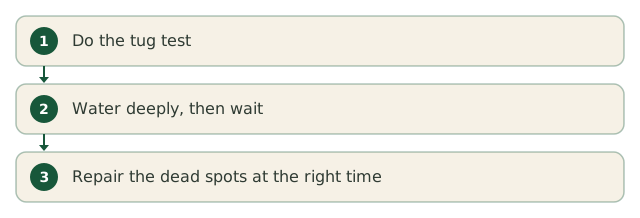
- Step 1
Do the tug test
Grab a handful of the browned grass and pull. If it holds firm and the base is white and firm, it's alive, which doesn't rule out disease or insects. If it lifts out easily with dry, brown crowns, that patch is dead and will need repair (new sod may just not have rooted).
- Step 2
Water deeply, then wait
If the soil is dry, give an established lawn a deep morning soak (new sod or seed: water lightly and often). Dormant grass re-greens once it gets water or the heat breaks, often within a week or two. There's no fixed deadline: repair only spots whose crowns stay dead.
- Step 3
Repair the dead spots at the right time
Save real repairs for the right window, and match the method to your grass. Cool-season lawns (fescue, bluegrass, ryegrass) are reseeded in early fall, when cooling air and warm soil give new seed its best start. Warm-season lawns repair fastest during warm-weather growth — bermuda and zoysia from seed, sprigs, or sod, and St. Augustine only from sod, plugs, or sprigs (it can't be grown from seed). Repairing in the wrong season, or reseeding in summer heat, usually just wastes the effort.
Not sure this is the one?
Several lawn problems look alike from the porch, dead or dormant grass among them. Answer a few quick questions in the free YardLedger diagnosis tool and the tool checks your symptoms against all of them — and what to do about each — no signup required.
Diagnose my lawnGet the next seasonal job sent to you
We'll email you about three weeks before this ZIP's normal first freeze — while irrigation contractors still have slots, and before the backflow preventer is the part that freezes.
The blow-out reminder counts back from your metro's NOAA 1991–2020 median first freeze, not this year's forecast — a normal year, give or take a couple of weeks. Add your address and the reminder follows the live forecast for your own yard, with the checklist built around the zones and shut-offs you've mapped.
Preventing it next season
Mow within your grass's range, water deeply but infrequently, and avoid feeding cool-season grass in summer heat — a lawn that goes into summer strong rides out dormancy and bounces back instead of dying.
The habit that makes it worse
- The belief
- “A lawn that turns brown has died and needs replacing.”
- What’s actually happening
- Many lawn grasses go dormant under heat and drought: they stop growing and let the blades brown while the crowns at the soil line stay alive, ready to regrow when water or cooler weather returns. Kentucky bluegrass and the fine fescues do this readily in summer, though some grasses recover from a long dormancy better than others. Warm-season grasses such as bermuda and zoysia also brown off after frost each winter, and green up again as spring warms the soil.
- What it leads to
- Reading brown as dead leads people to tear out, reseed or heavily feed a lawn in the middle of summer — when new seed struggles and stressed grass is least able to use fertilizer — spending work and money on grass that would likely have come back by itself.
- What to understand instead
- Check whether brown grass is dormant before you replace anything. The tug test on this page tells a firm, living crown from a dead one. For summer browning, a deep soak or a cooler spell shows which parts re-green; a warm-season lawn browned by frost only re-greens once spring warms the soil, so judge it then. Dormancy has limits: a long dry spell with no water at all can kill turf, so keep the crowns alive with occasional watering, and repair only what stays brown.
What people ask about it
- How long can grass stay dormant and still come back?
- A healthy lawn can stay dormant for several weeks and survive. The longer the drought, the slower the recovery, so a light watering every couple of weeks during an extended dry spell keeps the crowns alive without breaking dormancy.
- Will watering bring a dormant lawn back to green?
- Watering usually does bring a dormant lawn back to green — dormant grass often re-greens within one to two weeks of consistent water or cooler weather, slower after a long drought. If a patch stays brown, check its crowns: dry, crumbly crowns mean it's dead and needs repair — reseeding for cool-season lawns in fall, or plugs, sprigs, or sod for warm-season grasses like St. Augustine that aren't repaired from seed.
Dead or dormant? by grass type
The signs of dead or dormant grass and the fix shift with your grass — its season, whether it self-repairs, and what it's sensitive to. Pick your grass for guidance tuned to it:
Where this guidance comes from
The university extension and public-agency publications listed here back specific statements on this page. Each publication says which statement it backs, so you can check the statement rather than take it on trust. Where a product label or your local extension office disagrees with anything here, follow the label or the extension office.
- Maintaining an Established Lawn
University of Maryland Extension
A cool-season lawn that browns in summer heat and drought is usually dormant rather than dead, and typically recovers on its own once conditions improve; warm-season grasses go dormant in winter instead.
- Home Lawn Watering Guide (G6720)
University of Missouri Extension
In dormant grass the crown at the soil line stays alive, and a thorough watering brings the lawn back into growth from those crowns — the basis for checking crowns and for watering, then waiting.
- Managing Lawns During Drought
University of Illinois Extension
During an extended dry spell, a light watering every few weeks keeps the crowns and roots alive so the lawn can resume growing later, without forcing it out of dormancy.
