
Cool-season grass
Fine Fescue: Dead or Dormant?
Worried about dead or dormant grass on your Fine fescue lawn? Tell a stressed-but-alive lawn from one that won't come back. This guide takes the general diagnosis and tunes it for Fine fescue — the signs to look for, what to do first, and how a cool-season lawn recovers — kept safety-first, with the product label as the final word.
What this means for Fine fescue
Fine fescue: The low-input grass for shade, sandy soil, and minimal watering. As a cool-season grass already under real stress in summer heat, a problem like this lands on a lawn that's fighting to hold on. Dead-or-dormant grass is a judgment call rather than a pest or disease — the tug test shows whether the grass is still alive, though not whether dormancy, disease or insects browned it. Steady it first — keep the mower within your grass's range and never scalp, water deeply and early, and hold off on feeding and spraying — then save any real repair for the fall renovation window, when it can actually recover. Worth knowing about Fine fescue generally: fine texture; good for low-maintenance and no-mow lawns.
How to tell on a Fine fescue lawn
- Dormant grass browns fairly evenly across an area and follows the heat and sun, not random patches.
- Tug a handful: living grass resists and the crowns at the soil line are firm and off-white — that shows it's alive, not that dormancy rather than disease or insects browned it.
- Truly dead turf pulls out in a loose handful, and the crowns are brown, dry, and crumbly.
- Dormant grass greens back up once it gets water or a cool spell — often within a week or two, slower after a long drought; dead patches don't.
What to do
- Step 1
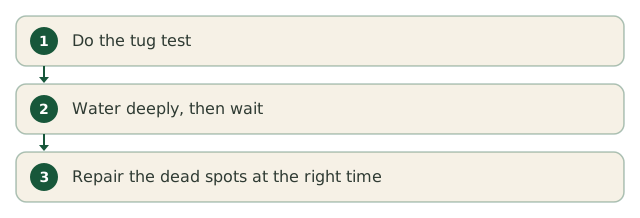
Do the tug test
Grab a handful of the browned grass and pull. If it holds firm and the base is white and firm, it's alive, which doesn't rule out disease or insects. If it lifts out easily with dry, brown crowns, that patch is dead and will need repair (new sod may just not have rooted).
- Step 2
Water deeply, then wait
If the soil is dry, give an established lawn a deep morning soak (new sod or seed: water lightly and often). Dormant grass re-greens once it gets water or the heat breaks, often within a week or two. There's no fixed deadline: repair only spots whose crowns stay dead.
- Step 3
Repair the dead spots at the right time
Save real repairs for the right window, and match the method to your grass. Cool-season lawns (fescue, bluegrass, ryegrass) are reseeded in early fall, when cooling air and warm soil give new seed its best start. Warm-season lawns repair fastest during warm-weather growth — bermuda and zoysia from seed, sprigs, or sod, and St. Augustine only from sod, plugs, or sprigs (it can't be grown from seed). Repairing in the wrong season, or reseeding in summer heat, usually just wastes the effort.
Not sure it's Dead or Dormant??
On Fine fescue, dead or dormant grass can look like several other problems. Answer a few quick questions in the free YardLedger diagnosis tool and the tool narrows what your Fine fescue lawn is actually showing — and the fix for each — no signup required.
Diagnose my lawnHow Fine fescue recovers
Fine fescue is a bunch-type grass that doesn't creep to fill gaps, so any spots killed off won't knit back together on their own. Once the problem is resolved, overseed the bare areas during the fall renovation window. One thing working in Fine fescue's favor: best shade tolerance among cool-season grasses. Any patch that turns out to be truly dead needs an actual repair, not just more water — reseed a cool-season lawn or replant a warm-season one at the right time of year.
Safety first on Fine fescue
Fine fescue is easily over-fertilized — more nitrogen weakens it. Stay near the low end of its 1–2 lb annual budget and plan each feeding at about 1 lb per 1,000 sq ft or less (a planning default).
Don't rush to reseed or replace turf that might just be dormant — treating a living, dormant lawn as dead wastes money and can cut short a recovery that was already underway. And more generally, Fine fescue has this going for it: low water and low fertilizer needs. Always read and follow the product label — it is the legal authority on rates, timing, and safety. These windows are regional estimates, not a prescription; defer to the label and your local extension office.
Preventing it next season
Mow within your grass's range, water deeply but infrequently, and avoid feeding cool-season grass in summer heat — a lawn that goes into summer strong rides out dormancy and bounces back instead of dying.
