
Crabgrass pre-emergent timing
When to Apply Pre-Emergent in Baltimore, MD: Typically March 13
In Baltimore, MD, shallow soil typically climbs through the ~50°F mark that opens the crabgrass pre-emergent window around March 13. From there you have roughly 26 days before soil reaches the ~55°F germination line — that gap is the typical planning margin, not a deadline. The date moves every year with the weather, so the ZIP check below shows the modeled soil temperature for your ZIP — the typical dates on this page are for planning.
- Window typically opens
- March 13
- Range across sampled years: February 24 – April 8
- Crabgrass germinates
- April 8
- Soil holding ~55°F on a 7-day average — the line a pre-emergent has to beat.
- Your margin
- 26 days
- Between the window opening and germination in a median year. Zone 7.
The pre-emergent dates on this page are typical for the metro, not a forecast: the median crossing across ten years of historical soil-temperature estimates, with the earliest and latest years shown beside it. Your own yard runs a little warmer if the soil is bare and south-facing, a little cooler if it is shaded or irrigated. Use the ZIP check above for what your soil is doing right now, and always follow your product's label for the rate and watering-in.
What is your soil doing right now?
The dates above are a ten-year median. Enter your ZIP for the live modeled soil temperature at your address and a verdict for this year — free, no signup.
Free · no signup · live modeled soil temperature
What the record says about Baltimore, MD
Across the 9 years of historical soil-temperature estimates behind this page, Baltimore, MD's 7-day soil average first crossed ~50°F on March 13 in a median year. Germination typically follows around April 8 — about 26 days later, which is the room Baltimore, MD gives you between the opening cue and the germination cue in a median year — planning figures, not deadlines. Those are the same two thresholds the live check above watches, computed with the same 7-day smoothing, so the typical window and today's verdict are describing one thing.
The crabgrass pre-emergent window is not a fixed date. In Baltimore, MD the crossing has landed anywhere in February 24 – April 8 — a span of 43 days. That is roughly a month of movement between the earliest and latest years, which is more than enough to make a fixed calendar date wrong in Baltimore, MD about as often as it is right.
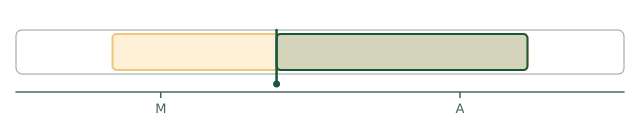
- Apply here — March 13 to April 8
- Opening range across the sampled years — February 24 – April 8
- Median opening — March 13
Why national advice misses Baltimore, MD
Ranked by median opening date, Baltimore, MD is the 27th earliest of the 71 metros in this dataset. That places Baltimore, MD in the middle of the national range, which is exactly where generic advice is most seductive and still wrong in any individual year — the spread below is why.
Baltimore, MD is the only Maryland metro in this dataset, so there is no in-state comparison to draw — which also means a Maryland reader has nothing closer to check against. The ZIP check above is reading a weather-model cell for your actual coordinates, so use it rather than borrowing a date from the nearest state with a page.
“Wait for the last frost” in Baltimore, MD
The rule you will hear most often is "put it down after the last frost". Run the numbers for Baltimore, MD and it falls apart: your soil typically crosses ~50°F on March 13, but the median last spring freeze is April 10 — 28 days LATER. Following the frost rule here means applying 28 days after the window opened, deep into the germination band the page above describes.
Baltimore, MD runs about 204 frost-free days between its median freezes — a long enough germinating season that the back end of it can outlast a single application's residual. Worth reading your product's label for whether it supports a second application later in spring, rather than assuming one pass covers the year.
Still deciding in Baltimore, MD?
- When should I apply pre-emergent in Baltimore, MD?
- The pre-emergent window in Baltimore, MD opens around March 13 in a typical year — the median date the city's shallow soil crosses ~50°F on a 7-day average. Because that date has ranged February 24 – April 8 across the record, use the ZIP check at the top of this page for what your soil is doing this year rather than applying on the same weekend each spring.
- Is it too late for pre-emergent in Baltimore, MD?
- The honest line for pre-emergent in Baltimore, MD is germination: once soil there is past ~55°F — typically around April 8, a median rather than a deadline — crabgrass is usually starting to come up, and most pre-emergents can't control a plant that has already emerged (some dithiopyr labels add control of very young crabgrass within a growth-stage limit). Germination usually stretches over weeks, so an application just past that line can still reduce later seedlings; well past it, post-emergent control for plants already up and an earlier start next spring are the usual plan.
- Does the USDA zone tell me when to apply in Baltimore, MD?
- The USDA zone is not a useful guide to pre-emergent timing in Baltimore, MD, which is zone 7: a hardiness zone measures average winter cold — not how fast soil warms in spring. Two metros in zone 7 can cross the ~50°F mark weeks apart depending on latitude, elevation and how maritime the climate is, which is why this page is built on historical soil-temperature estimates for Baltimore, MD rather than on its zone.
- Can I just apply on the same weekend every year in Baltimore, MD?
- Applying pre-emergent on the same weekend every year in Baltimore, MD works in an average year. The record says the city's window has opened anywhere in February 24 – April 8 — 43 days of movement — so a fixed weekend is early by a fortnight in a late spring and late by one in an early spring. Applying early costs you residual at the far end of the season; applying late costs you the earliest germinating seeds. Reading soil temperature is what removes the coin flip.
- How much margin do I have in Baltimore, MD once the window opens?
- Baltimore, MD gives you about 26 days of pre-emergent margin in a typical year: soil crosses the ~50°F opening mark around March 13 and reaches the ~55°F germination line around April 8. Aim for the front of that gap rather than the back — a pre-emergent needs rain or irrigation to move it into the top layer of soil before it is doing anything at all, and that watering-in takes days you do not want to be spending after germination has started.
- Will pre-emergent stop grass seed I put down in Baltimore, MD?
- Most conventional pre-emergents can injure seedlings or prevent establishment. Before seeding treated ground, follow the exact product's reseeding interval for the rate used; waits are often months, not weeks. Before treating newly seeded grass, follow its separate waiting, mowing and establishment requirements. Use a product at seeding only when its label allows your grass species, seed mixture, rate and timing. For crabgrass prevention while seeding cool-season grass, mesotrione products with new-seeding directions are an option only for the existing turf and seed mixture that product lists. Species and timing differ by product, especially for fine fescue; avoid over-application, particularly with perennial ryegrass.
