
Warm-season grass • USDA Zone 7
Bermuda Grass Lawn Care Schedule — USDA Zone 7
Bermuda grass in USDA zone 7, a rough regional proxy, greens up early March to mid-April. Put the spring pre-emergent down mid-March to early April and make the first feeding late April to mid-May once the lawn is fully green, with the final feeding early September to mid-September. Mow at your cultivar's height (species span: 0.5–2.5 inches).
Bermuda grass is a fast-growing, sun-loving warm-season turf prized for its heat and drought tolerance and its ability to bounce back from heavy use. It thrives in full sun and goes dormant (brown) over winter, greening up once soil temperatures climb in spring. These windows use USDA hardiness zone 7 — mild transition-zone winters (coldest winter temperatures typically around 0 to 10°F) — as a rough proxy for your local season. A hardiness zone reflects winter cold, not spring soil temperature, heat, or frost dates, so treat these windows as a regional starting point — your local soil temperature, frost dates, and recent weather should have the final say on green-up, fertilizing, and pre-emergent timing.
- Type
- Warm-season
- Mowing height
- Hybrid 0.5–1.5″ · Common or seeded 1–2.5″
- Nitrogen planning range
- 2–5 lbs N / 1,000 sq ft / yr
- Growth habit
- Spreading (self-repairs)
- Shade tolerance
- Low
- Drought tolerance
- High
- Traffic tolerance
- High
- Winter low
- coldest winter temperatures typically around 0 to 10°F
What Zone 7 means for this schedule
USDA zone 7 means mild transition-zone winters (coldest winter temperatures typically around 0 to 10°F). Every window below is placed about the same time as the transition-zone (zone 7) baseline this schedule is built from. And it's the coldest zone Bermuda grass is commonly grown in here — right at its winter-hardiness limit, so timing has the least room for error.
Zone 7's median last spring freeze falls around April 5 and its first fall freeze around November 1 — about 210 days of growing season. After the three weeks post-green-up and the six weeks before the freeze, zone 7 fits about 5 passes at 4–6 week spacing — as many as the top of bermuda grass's 2–5 lb planning range spans at roughly a pound each. That top figure is the high end of a regional example rather than a target: a lawn managed at the 2 lb end is 2 passes, and at that rate this calendar has room to spare. That is the transition-zone baseline every other zone on this schedule is measured against, which is why nothing here is moved.
Two dates on this zone 7 bermuda grass schedule are counted from the local freeze dates rather than a month: seeding bermuda grass is a LATE SPRING job here, not a fall one — the soil has to reach the mid-60s°F before the seed will move, which is around April 26 in this zone, and a new stand needs roughly three months to cover before dormancy, so August 3 is the far edge. The fall seeding advice written for cool-season lawns does not transfer; and a late-season feeding wants to be finished by about September 20 — the six-week margin this schedule keeps ahead of the freeze, a conservative policy rather than a measured threshold. Both move with zone 7's own freeze date, not with the calendar month the national advice names.
If you are near a zone boundary, the size of the mistake is worth knowing: zone 8 gets 30 more days, starting 2 weeks earlier and holding 2 weeks longer into fall. A hardiness zone measures winter cold rather than the length of the season, so where your own frost dates disagree with the map, follow the frost dates — bermuda grass responds to soil temperature and daylength, not to a zone number.
Different zone?
See the Bermuda schedule for another USDA hardiness zone, or the full Bermuda care guide.
Key care windows for Zone 7
Timing windows are flexible (early / mid / late) and tuned to Zone 7's season — soil temperature and your local weather should always have the final say.
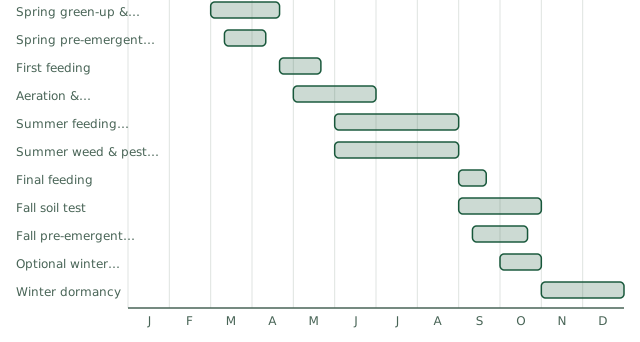
Spring green-up & first mow
Timing: early March to mid-April
Warm-season turf begins breaking dormancy as soil temperatures reach about 55°F, but it isn't actively growing until the soil warms to roughly 65°F.
Bermuda grass takes a spring reset well: make one early cleanup mow cut lower than usual to clear matted dormant leaf and let sunlight reach the crowns — down toward 0.5″, bagging the debris, and never scraping soil. Go back to the normal height for the rest of the season. Local guidance varies on how low, and on a lawn with uneven ground or a thin stand it is worth skipping entirely.
Don't fertilize until it's about 50% green and actively growing — roughly when soil temperatures hold above ~65°F.
Zone 7's median last spring freeze is around April 5, which is 31 days AFTER this window opens. So the early part of it is cleanup on grass that can still be frosted, and bermuda grass tolerates a low cut (down to about 0.5″), so a single low cleanup pass is the efficient way to clear matted growth. Nothing you apply before that freeze date is working on a lawn that is actually growing.
Spring pre-emergent (crabgrass)
Timing: mid-March to early April
Apply a pre-emergent herbicide as soil temperatures climb through the low 50s°F — before they reach the ~55°F at which crabgrass germinates — to stop summer weeds before they start. Whether a second pass is called for, how long after the first, and what the season's total may add up to are all set by the active ingredient and rate on your label, not by a general rule: some products are labeled for a split program and some are a single application for the year. Pick the product first, then read its split-application and maximum-annual-rate directions.
The catch in zone 7 is that this window closes at essentially the same moment as the median last freeze (April 5) — the ground is still going in and out of frost while the barrier needs to go down. Soil temperature, not the calendar and not the frost date, is the trigger to watch here; a soil thermometer is worth more than a reminder. Aim carefully rather than evenly: bermuda grass has low shade tolerance, so the thin ground under trees and along the north side is where crabgrass gets in, and it is where the barrier has to be intact.
First feeding
Timing: late April to mid-May
Make the first fertilizer application 2–4 weeks after full green-up, once the lawn is actively growing. Bermuda is a heavy feeder during its summer growth peak. Budget about 2–5 lbs of nitrogen per 1,000 sq ft across the whole season — toward the high end for a showcase lawn in the Deep South, less for a low-input one — split into several feedings every 4–6 weeks from full green-up until about 6 weeks before your first expected frost.
Bermuda's appetite for nitrogen makes over-applying easy. Plan each feeding at about 1 lb of nitrogen per 1,000 sq ft or less (a planning default), and stop nitrogen about 6 weeks before frost — a conservative margin ahead of dormancy.
Aeration & dethatching
Timing: early May to late June
Core-aerate during active growth to allow recovery; avoid aerating dormant or drought-stressed turf. Before dethatching, measure the layer: over about ½" warrants assessment, not automatic removal. Consider grass type, site conditions and symptoms, and follow local species and equipment guidance. For dethatching, ordinarily wait for full green-up and active growth with recovery time, including on St. Augustine and centipede. Oklahoma offers pre-green-up guidance; do not generalize it nationally. Confirm species, method and recovery conditions locally.
Zone 7 has room here — about 129 days of growing season stand between the close of this window and the median first freeze on November 1, and bermuda grass spreads, so it closes the holes itself given growing weather. With that much recovery the constraint is soil moisture rather than the calendar.
Summer feeding program
Timing: early June to late August
Summer is the warm-season growth peak. Bermuda is a heavy feeder during its summer growth peak. Budget about 2–5 lbs of nitrogen per 1,000 sq ft across the whole season — toward the high end for a showcase lawn in the Deep South, less for a low-input one — split into several feedings every 4–6 weeks from full green-up until about 6 weeks before your first expected frost. Spread the annual budget across the season rather than applying it all at once.
Plan about 1 lb of nitrogen per 1,000 sq ft per feeding or less — a conservative default, not a universal limit. This schedule stops nitrogen about 6 weeks before your first expected frost, a conservative margin.
Summer weed & pest watch
Timing: early June to late August
Spot-treat broadleaf weeds during active growth, never on drought-stressed turf. Watch for insect and disease pressure in hot, humid weather and treat problem areas rather than the whole lawn.
Final feeding
Timing: early September to mid-September
Give a final feeding in early fall, then stop nitrogen well ahead of frost — this schedule allows about six weeks, a conservative margin rather than a measured threshold, and extension cutoffs vary by species and region. How late this can run is regional: closer to the Gulf the grass is still growing well into autumn, while at the cold edge of its range this window closes weeks earlier, which is why it is pinned to your own freeze normals rather than to a month.
The date above is firm: it already includes this schedule's six-week margin for zone 7. bermuda grass comes off nitrogen by about September 20 to clear the median first freeze on November 1, so the window closes around September 15 rather than at the month the national advice names. That is 2 stretches of usable time for the tail of bermuda grass's 2–5 lb annual nitrogen — 2–5 passes at a pound each — so treat the opening as the target: a pass missed here lands the year nearer the 2 lb end of that range, not at a heavier rate later.
Stop nitrogen about 6 weeks before your first expected frost (a conservative margin; extension cutoffs vary).
Fall soil test
Timing: early September to late October
Fall is the best time to take a soil test: lime or sulfur has the winter to react, and you go into spring with a real pH and fertility picture instead of guesswork. Send it to your state extension lab and tell them which grass you grow — the target pH is species-specific, and a lab that knows you have centipede reports against a different range than one assuming bluegrass.
Fall pre-emergent (winter weeds)
Timing: mid-September to mid-October
A fall pre-emergent applied before soil cools below about 70°F controls winter annual weeds like Poa annua and henbit. Treat fall pre-emergent and winter overseeding as alternatives unless the exact product label permits both; many products can injure new ryegrass. A product-specific exception needs label permission for the existing turf, seed mixture, rate and stage.
In zone 7 the cue and the calendar roughly agree: the median first freeze is November 1, about 47 days after this window opens, so soil is falling through the ~70°F germination threshold at much the same time the weather starts to turn — cooling weather is a usable prompt here in a way it is not further south.
If you intend to overseed with ryegrass this fall, check compatibility before applying.
Optional winter overseed
Timing: early October to late October
For green color over winter dormancy, you can overseed with perennial ryegrass once soil cools below about 70°F. It's optional and adds maintenance — skip it if you're happy with a dormant, straw-colored lawn.
Zone 7 is where this earns its keep: dormancy runs roughly 155 days here, so a straw-colored lawn is the default for a meaningful part of the year. The trade is real work — a ryegrass stand needs mowing and water all winter, and it has to be gone before the bermuda grass comes out of dormancy.
Treat fall pre-emergent and overseeding as alternatives unless the exact product label permits both; many products can injure new ryegrass.
Winter dormancy
Timing: early November to late December
Wherever winter brings frost, expect a brown, dormant lawn from the first frost until spring green-up: hold off on fertilizer and pre-emergent, and give a light watering during extended winter drought to prevent desiccation. In the warmest, nearly frost-free areas (roughly USDA zone 10 — south Florida, coastal Southern California), the lawn often just slows down and stays partly green rather than going fully dormant; keep mowing and watering lightly as needed, and it can still use a little nitrogen or iron for winter color.
Dormancy runs about 155 days in zone 7 — and this is the coldest zone bermuda grass is commonly grown in, so dormancy here is not just a wait. It is the season winter injury happens in, and thin or bare patches showing up at green-up are usually damage done now rather than anything that went wrong in spring. bermuda grass can creep back into small patches on its own once it is growing again.
Month-by-month schedule
A quick at-a-glance plan for Bermuda grass in USDA zone 7, month by month.
| Month | Season | What to do |
|---|---|---|
| January | Winter· dormant |
|
| February | Winter· dormant |
|
| March | Spring |
|
| April | Spring |
|
| May | Spring |
|
| June | Summer |
|
| July | Summer |
|
| August | Summer |
|
| September | Fall |
|
| October | Fall |
|
| November | Fall· dormant |
|
| December | Winter· dormant |
|
See these dates for your exact yard
Bermuda and zone 7 are already filled in — add your ZIP in the free schedule generator for a month-by-month plan shifted to zone 7's season — no signup required.
Open the schedule generatorWant a heads-up on Bermuda's next deadline?
We'll email you about three weeks before this ZIP's normal first freeze — while irrigation contractors still have slots, and before the backflow preventer is the part that freezes.
The blow-out reminder counts back from your metro's NOAA 1991–2020 median first freeze, not this year's forecast — a normal year, give or take a couple of weeks. Add your address and the reminder follows the live forecast for your own yard, with the checklist built around the zones and shut-offs you've mapped.
Bermuda at a glance
- Exceptional heat and drought tolerance
- Recovers fast from wear and damage (spreads by rhizomes and stolons)
- Dense, fine-textured turf in full sun
- Needs full sun — thins badly in shade
- Aggressive: spreads into beds and borders
- Fully dormant and brown through winter
For the full Bermuda mowing, watering, fertilizing, and weed-control guide that applies in every zone, see the complete Bermuda lawn care schedule.
Bermuda lawn problems to rule out in zone 7
Browning, patches, or pests on a bermuda grass lawn? These guides help you diagnose what's actually wrong and what to do about it — safely, before you treat.
Zone 7 describes winter cold only (coldest winter temperatures typically around 0 to 10°F), so it can't tell you which of these problems is common where you live. Summer heat, humidity, rainfall, soil and the pests actually present nearby decide that, and they vary within a zone. These guides are listed in the same order on every zone page; your local Extension office can help you find out which ones are active in your area this season.
- Chinch bugsSpreading brown in the hottest, driest part of the lawn.
- ArmywormsGreen to brown in days — the late-summer caterpillar that eats lawns.
- GrubsSpongy turf that lifts like carpet — and how to confirm it.
- Lawn fungus & diseaseBrown patch, dollar spot, and the conditions that cause them.
- Brown patchesRound, spreading, or random — what brown patches are telling you.
- Dead or dormant?Tell a stressed-but-alive lawn from one that won't come back.
Want it green through winter?
Bermuda goes straw-brown in dormancy. You can overseed it with ryegrass for winter color — sown once the lawn slows and soil falls through about 70°F, mowed through the off-season, and transitioned back out before spring green-up. It also rules out a fall pre-emergent that year. The full trade-off, and which ryegrass to use, is in overseeding bermuda grass with ryegrass.
Is it too late for pre-emergent where you are?
"mid-March to early April" above is a long-term window, and the real trigger is soil temperature. Enter your ZIP in the free pre-emergent check to see where your soil sits against the crabgrass threshold right now — no signup required.
Check my pre-emergent windowA starting point — your plan adjusts to your yard
The Bermuda schedule on this page is a research-based template tuned to your grass type and USDA zone. Your lawn is one of a kind, though: the right timing and amounts also depend on your soil test, sun and shade, irrigation, lawn size, and the goals you set — a low-input yard, the deepest possible color, or just crowding out weeds. YardLedger takes this template and adjusts it to your yard's specific needs, then keeps refining it from the history of what you've actually done and how the lawn responded — so every recommendation gets more personal over time.
Safety first
Bermuda's appetite for nitrogen makes over-applying easy. Plan each feeding at about 1 lb of nitrogen per 1,000 sq ft or less (a planning default), and stop nitrogen about 6 weeks before frost — a conservative margin ahead of dormancy.
Local fertilizer rules can be stricter than this and can override it: several states and counties set a lower per-application limit, cap the soluble (quick-release) fraction separately, require a share of slow-release nitrogen, or ban applications outright during a seasonal blackout. Check your state or county rules before you spread.
Most conventional pre-emergents can injure seedlings or prevent establishment. Before seeding treated ground, follow the exact product's reseeding interval for the rate used; waits are often months, not weeks. Before treating newly seeded grass, follow its separate waiting, mowing and establishment requirements. Use a product at seeding only when its label allows your grass species, seed mixture, rate and timing. For crabgrass prevention while seeding cool-season grass, mesotrione products with new-seeding directions are an option only for the existing turf and seed mixture that product lists. Species and timing differ by product, especially for fine fescue; avoid over-application, particularly with perennial ryegrass.
Always read and follow the product label — it is the legal authority on rates, timing, and safety. These windows are regional estimates, not a prescription; defer to the label and your local extension office.
Where this guidance comes from
- Carolina Lawns: A Guide to Maintaining Quality Turf in the Landscape (AG-69) (NC State Extension)
- Fertilizing Lawns (HGIC 1201) (Clemson Cooperative Extension)
- Crabgrass (University of Minnesota Extension)
- How to Use the Maps — USDA Plant Hardiness Zone Map (USDA Agricultural Research Service)
