
Cool-season grass • USDA Zone 8
Annual Ryegrass Lawn Care Schedule — USDA Zone 8
Annual ryegrass in USDA zone 8, a rough regional proxy, is a temporary cover: sow it early September to late October, mow and lightly feed the new stand late October to late December, and ease it out early March to late April as spring warms — it dies out in summer heat by design. Mow it at 1.5–2.5 inches.
Annual ryegrass is a cool-season grass that germinates fast and cheap but lives only a season — it is used for quick temporary cover, erosion control, and overseeding dormant warm-season lawns for winter color in the South. It is coarser and shorter-lived than perennial ryegrass, dying out in summer heat, so it is a tool for a season rather than a permanent lawn. These windows use USDA hardiness zone 8 — mild Southern winters (coldest winter temperatures typically around 10 to 20°F) — as a rough proxy for your local season. A hardiness zone reflects winter cold, not local soil temperature or frost dates, so treat these windows as a regional starting point — your local soil temperature, frost dates, and recent weather should have the final say on renovation and feeding timing.
- Type
- Cool-season
- Mowing height
- 1.5–2.5″
- Nitrogen planning range
- 1–3 lbs N / 1,000 sq ft / yr
- Growth habit
- Bunch-type
- Shade tolerance
- Moderate
- Drought tolerance
- Low
- Traffic tolerance
- Moderate
- Winter low
- coldest winter temperatures typically around 10 to 20°F
What Zone 8 means for this schedule
USDA zone 8 means mild Southern winters (coldest winter temperatures typically around 10 to 20°F). Here, annual ryegrass is a temporary, use-case-driven cover rather than a perennial lawn, so its calendar below runs the same in every zone instead of shifting with your winter low. And it sits 1 zone cooler than the warmest end of Annual ryegrass's range here and 4 zones warmer than the coldest (zones 4–9 overall).
Different zone?
See the Annual Ryegrass schedule for another USDA hardiness zone, or the full Annual Ryegrass care guide.
Key care windows for Zone 8
Timing windows are flexible (early / mid / late) and tuned to Zone 8's season — soil temperature and your local weather should always have the final say.
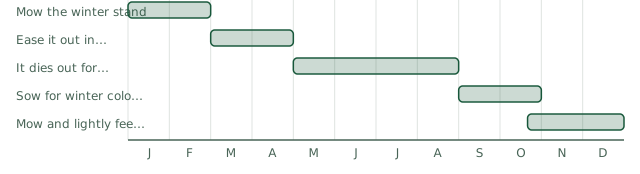
Mow the winter stand
Timing: early January to late February
Annual ryegrass is a temporary, one-season grass — most often overseeded onto a dormant warm-season lawn for winter color in the South, or used as fast cover. While it's up and growing, mow at 1.5–2.5". Keep inputs light: it's short-term color, not a lawn you're building for the long haul.
Ease it out in spring
Timing: early March to late April
As spring warms, annual ryegrass starts to decline — and if it's overseeded on a warm-season lawn, you want it gone before it competes with your base grass's green-up. Mow a little lower, stop feeding, and cut back water to hand the yard back to the warm-season turf. Annual ryegrass will not survive summer, so don't try to carry it through.
It dies out for summer (by design)
Timing: early May to late August
Annual ryegrass dies out in late spring and summer heat — that's expected, not a failure. It's an annual: it stores nothing for next year and needs no summer-survival, aeration, or overseeding program of its own. If a warm-season lawn is underneath, that grass carries the yard through summer; otherwise the ground is simply bare until you re-sow in fall.
Sow for winter color or quick cover
Timing: early September to late October
Early to mid fall, once soil cools below about 70°F, is when annual ryegrass is sown — to overseed a dormant warm-season lawn for winter color, or as fast temporary cover and erosion control. It germinates in just a few days; keep the seedbed consistently moist until it fills in. Plan on re-sowing every year — it's a single-season grass.
Mow and lightly feed the new stand
Timing: late October to late December
Once the new seedlings reach about 2–3", start mowing at 1.5–2.5" to thicken the stand, and keep it moist while it establishes. A single light feeding helps on poor soil, but skip heavy nitrogen — you're after temporary color, not push growth. A light feeding — about 1–3 lbs of nitrogen per 1,000 sq ft over its short life — keeps annual ryegrass green. When it is overseeded onto a dormant warm-season lawn, keep feeding light so you do not push the ryegrass at the expense of the base lawn's spring green-up.
When overseeding a dormant warm-season lawn with annual ryegrass, check the pre-emergent label for both grasses, seed mixture, rate and stage; many products can injure seedlings. Stop overseeding early enough that the ryegrass fades before it competes with spring green-up. Plan each feeding at about 1 lb of nitrogen per 1,000 sq ft or less (a planning default).
Month-by-month schedule
A quick at-a-glance plan for Annual ryegrass in USDA zone 8, month by month.
| Month | Season | What to do |
|---|---|---|
| January | Winter |
|
| February | Winter |
|
| March | Spring |
|
| April | Spring |
|
| May | Spring· dormant |
|
| June | Summer· dormant |
|
| July | Summer· dormant |
|
| August | Summer· dormant |
|
| September | Fall |
|
| October | Fall |
|
| November | Fall |
|
| December | Winter |
|
See these dates for your exact yard
Annual Ryegrass and zone 8 are already filled in — add your ZIP in the free schedule generator for a month-by-month plan shifted to zone 8's season — no signup required.
Open the schedule generatorWant a heads-up on Annual Ryegrass's next deadline?
We'll email you about three weeks before this ZIP's normal first freeze — while irrigation contractors still have slots, and before the backflow preventer is the part that freezes.
The blow-out reminder counts back from your metro's NOAA 1991–2020 median first freeze, not this year's forecast — a normal year, give or take a couple of weeks. Add your address and the reminder follows the live forecast for your own yard, with the checklist built around the zones and shut-offs you've mapped.
Annual Ryegrass at a glance
- Germinates very fast and cheaply for quick cover
- Great for erosion control and temporary lawns
- Overseeds dormant warm-season lawns for winter color in the South
- Temporary — dies out in summer heat, so it is not a permanent lawn
- Coarser textured than perennial ryegrass
- Can become a weedy nuisance in a permanent lawn if it reseeds
For the full Annual Ryegrass mowing, watering, fertilizing, and weed-control guide that applies in every zone, see the complete Annual Ryegrass lawn care schedule.
Annual Ryegrass lawn problems to rule out in zone 8
Browning, patches, or pests on a annual ryegrass lawn? These guides help you diagnose what's actually wrong and what to do about it — safely, before you treat.
Zone 8 describes winter cold only (coldest winter temperatures typically around 10 to 20°F), so it can't tell you which of these problems is common where you live. Summer heat, humidity, rainfall, soil and the pests actually present nearby decide that, and they vary within a zone. These guides are listed in the same order on every zone page; your local Extension office can help you find out which ones are active in your area this season.
- Heat & drought stressWhen the whole lawn browns evenly in the heat.
- Dead or dormant?Tell a stressed-but-alive lawn from one that won't come back.
- Lawn fungus & diseaseBrown patch, dollar spot, and the conditions that cause them.
- Brown patchesRound, spreading, or random — what brown patches are telling you.
- ArmywormsGreen to brown in days — the late-summer caterpillar that eats lawns.
A starting point — your plan adjusts to your yard
The Annual Ryegrass schedule on this page is a research-based template tuned to your grass type and USDA zone. Your lawn is one of a kind, though: the right timing and amounts also depend on your soil test, sun and shade, irrigation, lawn size, and the goals you set — a low-input yard, the deepest possible color, or just crowding out weeds. YardLedger takes this template and adjusts it to your yard's specific needs, then keeps refining it from the history of what you've actually done and how the lawn responded — so every recommendation gets more personal over time.
Safety first
When overseeding a dormant warm-season lawn with annual ryegrass, check the pre-emergent label for both grasses, seed mixture, rate and stage; many products can injure seedlings. Stop overseeding early enough that the ryegrass fades before it competes with spring green-up. Plan each feeding at about 1 lb of nitrogen per 1,000 sq ft or less (a planning default).
Local fertilizer rules can be stricter than this and can override it: several states and counties set a lower per-application limit, cap the soluble (quick-release) fraction separately, require a share of slow-release nitrogen, or ban applications outright during a seasonal blackout. Check your state or county rules before you spread.
Most conventional pre-emergents can injure seedlings or prevent establishment. Before seeding treated ground, follow the exact product's reseeding interval for the rate used; waits are often months, not weeks. Before treating newly seeded grass, follow its separate waiting, mowing and establishment requirements. Use a product at seeding only when its label allows your grass species, seed mixture, rate and timing. For crabgrass prevention while seeding cool-season grass, mesotrione products with new-seeding directions are an option only for the existing turf and seed mixture that product lists. Species and timing differ by product, especially for fine fescue; avoid over-application, particularly with perennial ryegrass.
Always read and follow the product label — it is the legal authority on rates, timing, and safety. These windows are regional estimates, not a prescription; defer to the label and your local extension office.
Where this guidance comes from
- Pros and Cons of Overseeding Warm-Season Lawns (Turf Tips Newsletter, 10-3-11) (Mississippi State University Extension Service)
- Overseeding Winter Grasses into Bermudagrass Turf (AZ1683) (University of Arizona Cooperative Extension)
- Fertilizing Lawns (HGIC 1201) (Clemson Cooperative Extension)
