
Every lawn
When to Stop Mowing in Fall — and How Short to Cut Last
Stop mowing when the grass stops growing — usually within a couple of weeks either side of the first hard freeze, not on a fixed date. A cool-season lawn can keep its usual height or step down gradually to the low end of its normal range, never below; warm-season grass generally goes into winter at its usual height.
The last mow of the year has no fixed date; it has a condition. You stop mowing when the grass stops growing, which for most lawns is somewhere around the first hard freeze but drifts by weeks with the season. What matters more than when is what height you leave it at: too long and it can mat down under snow and invite disease, too short and you have stripped the crowns of insulation going into the cold.
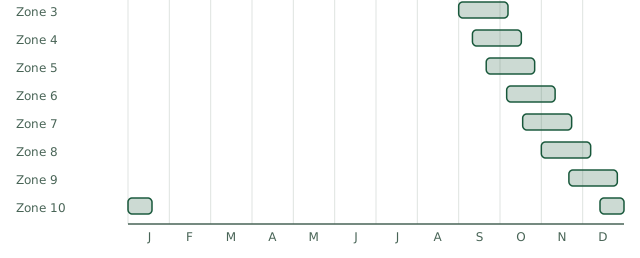
Last mow usually falls here, by zone
The windows below for when to stop mowing are approximate, counted from each zone’s typical first fall freeze rather than the calendar — the same week of work falls more than a month apart across the country.
| USDA zone | Last mow usually falls here | Average first freeze |
|---|---|---|
| Zone 3 | September 1 – October 6 | September 15 |
| Zone 4 | September 11 – October 16 | September 25 |
| Zone 5 | September 21 – October 26 | October 5 |
| Zone 6 | October 6 – November 10 | October 20 |
| Zone 7 | October 18 – November 22 | November 1 |
| Zone 8 | November 1 – December 6 | November 15 |
| Zone 9 | November 21 – December 26 | December 5 |
| Zone 10 | December 14 – January 18 | December 28 |
The dates in this table are zone-level approximations from long-term freeze normals. A hardiness zone measures winter cold rather than frost dates, so check your own local first-frost date — and where a job is driven by soil temperature, let that have the final say.
Look up the freeze these windows hang off
The table above is a zone average. Enter your ZIP for the NOAA freeze normals of the station we match to it — the date every window on this page hangs off — free, no signup required.
Free · no signup · NOAA 1991–2020 normals
Rather get one reminder when it’s time?
We'll email you about three weeks before this ZIP's normal first freeze — while irrigation contractors still have slots, and before the backflow preventer is the part that freezes.
The blow-out reminder counts back from your metro's NOAA 1991–2020 median first freeze, not this year's forecast — a normal year, give or take a couple of weeks. Add your address and the reminder follows the live forecast for your own yard, with the checklist built around the zones and shut-offs you've mapped.
The job, in order
- Step 1
Let the lawn tell you, not the calendar
Keep mowing as long as the grass keeps putting on height — that is often later into autumn than people expect, especially in a mild year. As growth slows, stretch the time between cuts rather than mowing on a fixed day. If it goes a few weeks without needing a cut as the weather cools, you are probably finished for the year.
- Step 2
Keep your usual height; ease a cool-season lawn to its low end
The last cut doesn't need to go below the lowest height you'd normally mow at, and many lawns simply keep their usual height. Where snow sits on a cool-season lawn, easing to the low end of its range over a few cuts can help keep the grass from matting over winter; a lawn already at the bottom of its range should not go lower. Going much lower can scalp the grass and expose its crowns to cold and drying out. Warm-season grass goes into winter at its usual height.
- Step 3
Step down gradually over the last few cuts
The last mow should never take the height down in one pass. Removing more than about a third of the blade at once stresses the lawn, and doing it on the last mow of the year means it goes into winter stressed with no time to recover. If a cool-season lawn is sitting high in its range, drop a notch at a time across the final two or three cuts. Warm-season grass stays at its usual height.
- Step 4
Stay off frosted grass
Frozen blades fracture when you walk or drive on them, and the footprints show as brown tracks for weeks. If there is frost on the lawn, wait for it to melt before mowing or crossing it — this holds all winter, not just on mowing day.
Before you start: the usual questions
- When should I stop mowing for the year?
- Stop mowing for the year when growth stops, which usually lands within a couple of weeks either side of the first hard freeze. There is no fixed date — in a mild autumn you may still be cutting well after neighbors have put the mower away, and that is correct.
- How short should the last mow be?
- Many lawns simply keep their usual height for the last mow of the year. If you lower a cool-season lawn for winter, go gradually and no shorter than the low end of its normal range, which depends on the grass: about 2.5 to 3 inches for tall fescue, and about 2 to 2.5 inches for Kentucky bluegrass. A lawn already mown at the bottom of its range, such as bentgrass, should not go lower. Warm-season grass goes into dormancy at its usual height; some regional calendars raise non-overseeded bermudagrass slightly before frost. Do not scalp it.
- What happens if I leave the grass too long over winter?
- Long grass folds over under snow and stays wet against the soil, which is ideal conditions for snow mould and other winter disease. It also gives voles cover to tunnel through, and you find the trails in spring.
- Should I mow after the first frost?
- Mowing after the first frost is fine if the grass is still growing — a light frost is not the end of the season. Just wait for the frost itself to melt off before you cut, since frozen blades break under traffic.
Where this guidance comes from
The university extension and public-agency publications listed here back specific statements on this page. Each publication says which statement it backs, so you can check the statement rather than take it on trust. Where a product label or your local extension office disagrees with anything here, follow the label or the extension office.
- When can I stop mowing the lawn in the fall?
Iowa State University Extension and Outreach
There is no set date for the last mow: keep cutting until the grass stops growing, then put the mower away.
- Maintaining an Established Lawn
University of Maryland Extension
Remove no more than about a third of the blade in one cut, and mowing cool-season grass too short weakens it.
- Avoid Traffic on Frozen Turf
Nebraska Extension (UNL Water)
Walking on frosted or frozen grass leaves footprints that show for weeks, so stay off it until the frost melts.
