
Every lawn
Fall Grub Control: Is It Too Late to Treat?
Whether fall grub treatment still helps depends on the grub species, its size and feeding depth, and the exact product — there is no universal fall cutoff. Inspect first: peel back a square foot of sod in several spots, identify and count what is there, and compare it with local thresholds and the label before treating at all.
Grub damage can become apparent in late summer or fall, but brown turf has many causes. Inspect and identify the pest before choosing a treatment. Product usefulness depends on the grub species, its size and feeding depth, and local timing; some products have both preventive and early curative uses. First decide whether the observed population and lawn condition justify treatment at all.
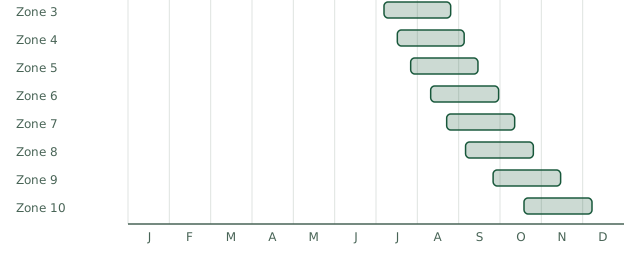
Curative window, by zone
The windows below for fall grub control are approximate, counted from each zone’s typical first fall freeze rather than the calendar — the same week of work falls more than a month apart across the country.
| USDA zone | Curative window | Average first freeze |
|---|---|---|
| Zone 3 | July 7 – August 25 | September 15 |
| Zone 4 | July 17 – September 4 | September 25 |
| Zone 5 | July 27 – September 14 | October 5 |
| Zone 6 | August 11 – September 29 | October 20 |
| Zone 7 | August 23 – October 11 | November 1 |
| Zone 8 | September 6 – October 25 | November 15 |
| Zone 9 | September 26 – November 14 | December 5 |
| Zone 10 | October 19 – December 7 | December 28 |
The dates in this table are zone-level approximations from long-term freeze normals. A hardiness zone measures winter cold rather than frost dates, so check your own local first-frost date — and where a job is driven by soil temperature, let that have the final say.
Look up the freeze these windows hang off
The table above is a zone average. Enter your ZIP for the NOAA freeze normals of the station we match to it — the date every window on this page hangs off — free, no signup required.
Free · no signup · NOAA 1991–2020 normals
Rather get one reminder when it’s time?
We'll email you about three weeks before this ZIP's normal first freeze — while irrigation contractors still have slots, and before the backflow preventer is the part that freezes.
The blow-out reminder counts back from your metro's NOAA 1991–2020 median first freeze, not this year's forecast — a normal year, give or take a couple of weeks. Add your address and the reminder follows the live forecast for your own yard, with the checklist built around the zones and shut-offs you've mapped.
The job, in order
- Step 1
Confirm you actually have grubs before treating anything
Cut a square-foot flap of sod a few inches deep in a damaged area and peel it back. Grub thresholds depend on species and turf condition: Maine Extension examples per square foot are 5–8 European chafer, 8–10 Japanese beetle or 3–4 larger May/June beetle grubs. Healthy, well-watered turf can tolerate more. Confirm identity and your local threshold before treating; brown patches have many causes besides grubs.
- Step 2
Use loose turf as a clue, then inspect
Root damage can make turf lift like loose carpet, but a pull test neither confirms nor rules out insects. Even anchored turf can warrant inspection. Sample several suspect spots, identify what is present and count it; drought, disease and other problems can also cause brown patches.
- Step 3
Match the product to the pest and local treatment window
For many annual grub species, preventive treatment targets the young summer cohort. If damaging grubs are already present, ask local Extension which labeled products work against that species and growth stage. Some products span preventive and early curative uses; others target larger grubs. Larger or deeper larvae can be harder to control.
Do not choose by the season or a preventive/curative category alone. Check local pesticide permission and the exact product's pest, timing and use directions. Always read and follow the product label — it is the legal authority on rates, timing, and safety. These windows are regional estimates, not a prescription; defer to the label and your local extension office.
- Step 4
Water it in, and mind the pollinators
For a soil-applied grub insecticide, follow its label's watering amount and deadline to move it into the treatment zone; measure delivered water and avoid runoff. Mow off flowering weeds first, avoid flower beds and ground-nesting bee areas, and follow the label's pollinator precautions. These steps reduce exposure, not every risk.
Remove flowering weeds before applying and follow all pollinator statements on the label. Always read and follow the product label — it is the legal authority on rates, timing, and safety. These windows are regional estimates, not a prescription; defer to the label and your local extension office.
Before you start: the usual questions
- Is it too late to treat grubs in fall?
- Whether fall is too late to treat grubs depends on the local species, growth stage and product. Some early curative uses overlap preventive products; do not assume a universal fall cutoff. Treatment often becomes less effective as larvae grow or move deeper. Confirm damaging numbers and local advice before treating, and reassess next year's need rather than applying automatically.
- How do I know if grubs are causing my brown patches?
- Loose sod is a clue to root damage, not a diagnosis, and anchored turf does not rule out insects. Peel back a square foot in several suspect spots, identify and count what is underneath, then compare the species, lawn condition and local threshold.
- How many grubs is too many?
- Grub thresholds depend on species and turf condition: Maine Extension examples per square foot are 5–8 European chafer, 8–10 Japanese beetle or 3–4 larger May/June beetle grubs. Healthy, well-watered turf can tolerate more. Confirm identity and your local threshold before treating; brown patches have many causes besides grubs.
- Will grubs damage the lawn over winter?
- Many annual grub species move deeper as soil cools and resume some feeding in spring before pupating, but species and climate vary. Inspect the damage and plan repair around the grass species' local growth or seeding window. Late fall is not automatically a suitable time to seed or apply insecticide.
Where this guidance comes from
The university extension and public-agency publications listed here back specific statements on this page. Each publication says which statement it backs, so you can check the statement rather than take it on trust. Where a product label or your local extension office disagrees with anything here, follow the label or the extension office.
- White Grubs in Home Lawns
Penn State Extension
Grub-damaged sod rolls back like carpet, about five to ten grubs per square foot is the usual curative threshold, and cold weather drives grubs deeper into the soil.
- An Integrated Approach to Insect Management in Turfgrass: White Grubs (FS1009)
Rutgers NJAES Cooperative Extension
Curative grub treatment works best while grubs are still small in late summer and early fall, and it needs to be watered in to reach the root zone.
- Dealing with Grubs in Lawns
University of Illinois Extension
Confirm grubs before treating by cutting and peeling back a square foot of sod and counting what is underneath, then water any insecticide in.
